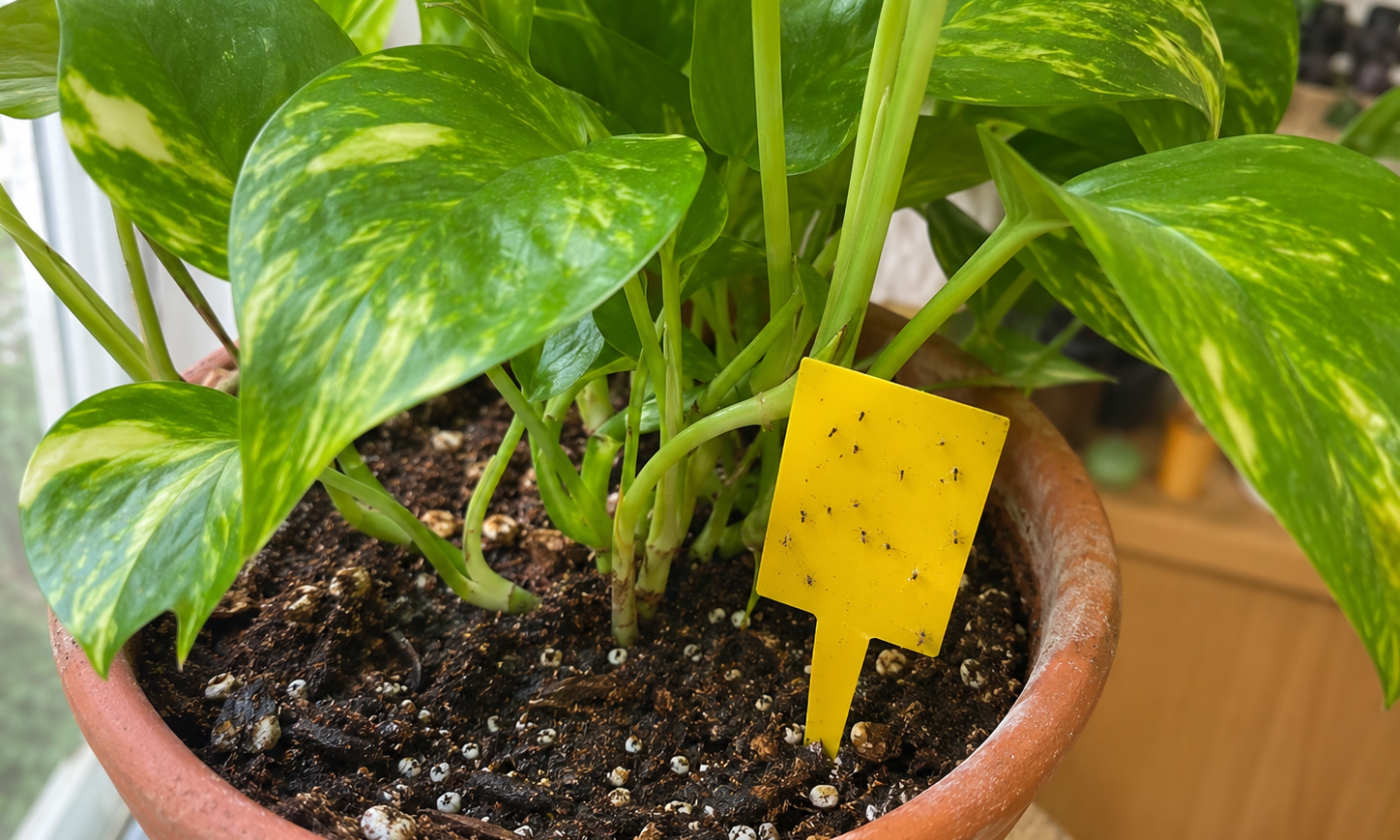
Two summers ago, every time I walked past my indoor plant shelf or picked up a coffee mug near my desk, tiny dark flies hovered up from the potting mix and flew straight toward my face. At first I thought they were fruit flies from the kitchen—until I watered my pothos and watched a dozen tiny black gnats crawl right out of the damp soil.
Those tiny insects are fungus gnats. While adult gnats do not bite humans or eat large leaves, they lay hundreds of eggs in damp potting mix—and their hungry larvae chew on delicate root hairs below the surface, stunting young plants and spreading root rot.
Here is the exact two-step routine I use to wipe out both the flying adults and the hidden soil larvae for good.
Quick Check: Fungus Gnats vs. Fruit Flies
Make sure you are targeting the right pest before treating your pots:
| Feature | Fungus Gnats | Fruit Flies |
| Body Shape | Slender, mosquito-like body with long thin legs | Round, plump body with short legs |
| Color | Dark gray or black | Tan or brownish with red eyes |
| Where They Hang Out | Hovering low over damp potting soil | Around ripe fruit, sink drains, or trash cans |
| Flying Style | Weak, erratic fliers that stay close to pots | Fast, steady fliers |
Why Fungus Gnats Invade Indoor Plants
Fungus gnats need one thing to survive and breed: constantly wet top soil. Female gnats lay up to 200 eggs in the top inch of moist potting mix. Within four days, tiny translucent larvae hatch and feed on soil fungi and tender plant roots before turning into new flying adults two weeks later.
If you only swat the flying gnats without treating the soil, a brand-new wave hatches every week.
Step-by-Step: How to Eliminate Fungus Gnats Completely
To break the gnat life cycle, you must attack both stages at the same time: catch the flying adults above the soil and kill the larvae below.
- Let the Top Two Inches of Soil Dry Out
Stop watering immediately. Fungus gnat eggs and larvae cannot survive in dry potting mix. Wait until the top two inches of soil feel completely dry to your finger before watering again. (Check my step-by-step indoor plant watering guide to avoid overwatering.)
- Place Yellow Sticky Traps in Every Pot
Adult fungus gnats are strongly attracted to bright yellow. Slide small yellow sticky traps into the soil next to the plant stems. Within 48 hours, the traps will catch dozens of egg-laying adults before they can reproduce again.
- Drench the Soil with Diluted Hydrogen Peroxide (3%)
To wipe out larvae living inside the potting mix without harming your plant’s roots, make a simple peroxide soil drench:
- Mix 1 part standard 3% hydrogen peroxide with 4 parts room-temperature water.
- Once the top two inches of soil are dry, pour the mixture slowly over the potting mix until it drains out the bottom holes.
- You will hear a gentle fizzing sound—this releases oxygen that destroys gnat larvae on contact and breaks down into plain water and oxygen within minutes.
- Top-Dress the Soil with Sand or Diatomaceous Earth
Once the soil surface dries out again, spread a half-inch layer of coarse horticultural sand or a light dusting of food-grade diatomaceous earth across the top of the potting mix. This creates a physical barrier that stops any remaining adult gnats from laying fresh eggs in the soil.
3 Habits That Keep Fungus Gnats Away Permanently
- Switch to bottom-watering: Setting your pot in a shallow tray of water lets roots drink from below while keeping the top inch of soil bone-dry—making your pots invisible to egg-laying gnats.
- Use fast-draining potting mix: Heavy, peat-rich soil stays soggy for days. Blend coarse perlite and coco coir into your mix so excess water drains fast. (See my homemade indoor potting soil recipe for exact ratios.)
- Quarantine new nursery plants: Most fungus gnats hitchhike home inside bags of cheap potting soil or newly bought nursery plants. Keep new plants isolated for two weeks before placing them next to your collection. (If you spot webbing or sticky leaves instead of soil flies, check my natural indoor plant pest removal guide.)