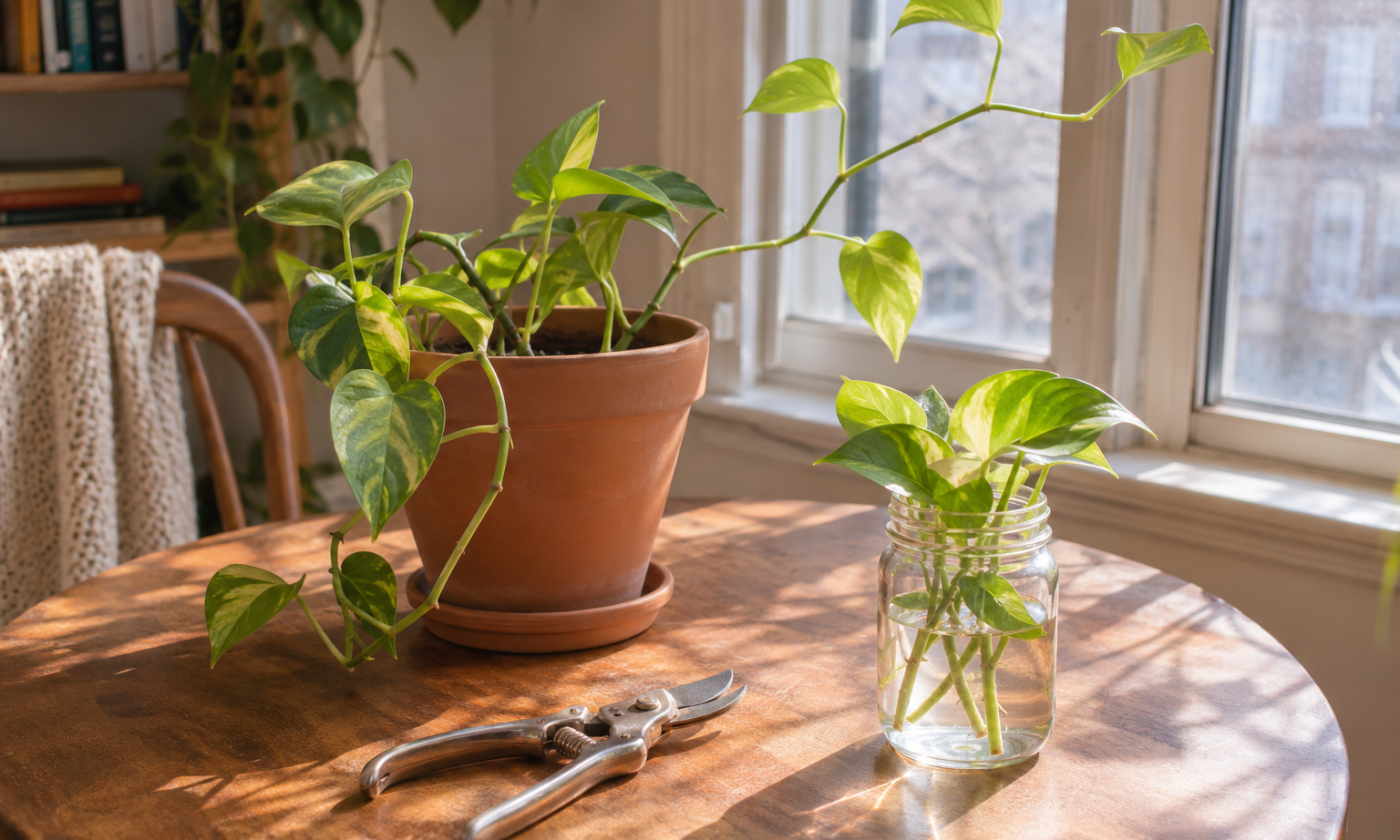
Two winters ago, I parked a lush golden pothos on top of a bookshelf ten feet away from an east-facing window. By February, it had grown three-foot bare vines with tiny, pale leaves spaced four inches apart.
That stretched-out look happens when a plant reaches desperately for light. You cannot shrink those long, empty stems back down, so the real fix takes two moves: cutting back the weak growth and moving the pot where the sun actually hits.
Quick Summary: What You Need
-
- Clean pruning shears or sharp scissors: Wiped down with 70% rubbing alcohol so you do not spread bacteria into fresh cuts.
- Clear glass jars: For rooting the healthy stem tips you cut off.
- A brighter spot or grow light: Within 2 to 4 feet of a window, or a basic 15-watt LED grow bulb on a 12-hour timer.
- Damp paper towel: To catch dripping sap on plants like ficus, pothos, or philodendron.
Why Indoor Plants Turn Leggy in the First Place
When a houseplant sits in dim shade, it pumps energy into lengthening its stems instead of growing wide leaves. Botanists call this etiolation, which simply means the plant is starving for photons and stretching toward the nearest bright window.
Even moving a pot three feet back from a window cuts usable light by more than half. Over two or three months, the gap between leaves widens, stems turn thin and floppy, and the bottom of the pot looks bald.
Before you touch your shears, check the stem firmness. Healthy leggy stems still feel crisp and green, while mushy, yellowing stems point to overwatering rather than low light.
Step 1: Fix the Light Before You Cut Anything
Pruning a leggy plant and leaving it in the same dark corner only gives you a shorter, weaker plant that stretches out again next month. Set up its new bright spot first so fresh buds get immediate fuel.
-
- Move closer to glass: Place the pot within 2 to 4 feet of an east- or south-facing window where the leaves see a wide patch of open sky.
- Watch out for harsh midday sun: If you use a direct west or south window, pull the pot back 2 feet or hang a sheer curtain so afternoon rays do not scorch shaded leaves.
- Rotate weekly: Turn the pot a quarter-turn every Sunday when you check soil moisture so the plant grows upright instead of leaning sideways.
If your room has no bright windows, clip a full-spectrum LED grow light 8 to 12 inches above the foliage for 10 to 12 hours a day.
Step 2: Find the Leaf Nodes on Your Stems
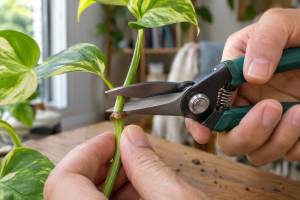
Every leafy houseplant stem has small bumps or rings where leaves attach—these are nodes. New branches and new roots only grow from these nodes, never from the smooth space in between.
Run your fingers along a bare vine and look for little brown nubs or slight ridges. On trailing plants like pothos, monstera, and tradescantia, you can often see tiny aerial root bumps sitting right opposite each leaf stem.
Plan every cut so that at least two or three nodes stay attached to the rooted base inside the pot.
Step 3: Prune Back the Stretched Stems
Wait until spring or early summer if you can, though an indoor plant under steady warm room temperatures (68°F to 78°F) recovers year-round. Water the plant lightly the day before so the stems are firm and hydrated.
-
- Disinfect your blades: Wipe your shears with rubbing alcohol and let them air-dry for ten seconds.
- Cut ¼ inch above a node: Snip cleanly at a slight angle just above a healthy node facing the direction you want new growth to point.
- Follow the one-third rule: Never remove more than 30% to 40% of the total foliage in a single session, or the roots will sit in wet soil with no leaves to pull water up.
- Clear dead stubs: Trim off any brown, shriveled stem tips left over from old leaf drops so energy goes straight into live buds.
Within 14 to 21 days in bright light, tiny green bumps will swell just below your cuts and push out compact, full-sized leaves.
Step 4: Turn Your Trimmings Into Free New Plants
Do not throw those long cut vines in the trash. The top 4 to 6 inches of any leggy stem usually holds the healthiest leaves and makes an easy propagation cutting.
-
- Snip each long vine into segments with two nodes per piece.
- Strip off the lowest leaf so no foliage sits underwater and rots.
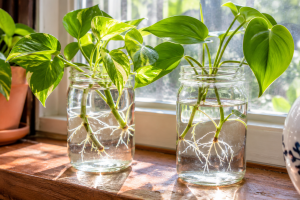
- Drop the bare bottom nodes into a jar of room-temperature tap water on a bright windowsill, and swap the water every 4 to 5 days.
Once white roots reach 2 inches long—usually in 3 to 4 weeks—pot those cuttings back into the top of the mother plant’s soil to make the base look twice as thick.
What Goes Wrong in Real Life (And How to Fix It)
Scenario 1: The Soil Stays Wet for Weeks After a Heavy Cut
After I chopped back an overgrown leggy coleus by half, I kept watering it on my usual six-day schedule. Within ten days, the potting mix smelled sour and the remaining lower leaves turned yellow.
The fix: Fewer leaves mean the plant drinks far less water. Lift the pot to judge its weight, and wait until the top 2 inches of soil feel completely dry before watering again.
Scenario 2: New Leaves Grow Tiny and Pale Even Near a Window
Sometimes you prune a stretched plant and move it to a windowsill, yet the new shoots still look thin and washed-out.
The fix: Check if the plant has been sitting in the same compacted soil for over a year. Potted soil loses nutrients after a few months, so feed with a balanced liquid houseplant fertilizer diluted to half-strength once a month during active growth.
Common Mistakes I Made (And How to Avoid Them)
-
- Leaving long bare “hat-rack” stubs above the node: Cutting two inches above a node leaves a dead stick that slowly turns brown and invites rot. Always cut ¼ inch above the bump.
- Cutting every stem to the exact same height: Trimming a bushy plant like a flat hedge makes it look stiff and boxy. Stagger your cuts by 1 to 2 inches so new growth layers naturally.
- Fertilizing on the exact day of pruning: Dumping full-strength plant food onto a freshly cut plant with fewer leaves can burn the root tips. Wait two weeks until you spot new green buds swelling.
- Putting a freshly moved plant in blazing direct sun: Leaves raised in deep shade have thin skin and blister fast. Ease the pot closer to a sunny window over 7 to 10 days.
Frequently Asked Questions
Will bare stems grow leaves back without pruning?
Almost never on indoor vines and soft-stemmed plants. Once a leaf drops from a lower node on a pothos, ficus, or philodendron, that spot stays bare unless you cut the stem above it to force side buds awake.
How long does it take for a pruned houseplant to look full again?
Expect to see tiny green growth points within 2 to 3 weeks in bright indirect light. Most fast growers like pothos, syngonium, and peperomia fill back out nicely in 6 to 8 weeks.
Should I prune a leggy plant in winter?
You can trim dangerous, trailing stems anytime, but heavy shaping works best between March and September when daylight lasts longer. If you must prune in winter, place the pot under a grow light so the new shoots do not stretch right back out.
Why did white sap drip out when I cut my plant?
Plants like rubber trees, weeping figs, and crotons bleed milky latex sap when cut. Press a damp paper towel against the cut for 30 seconds to stop the drip, and wash your hands afterward since the sap can irritate skin.