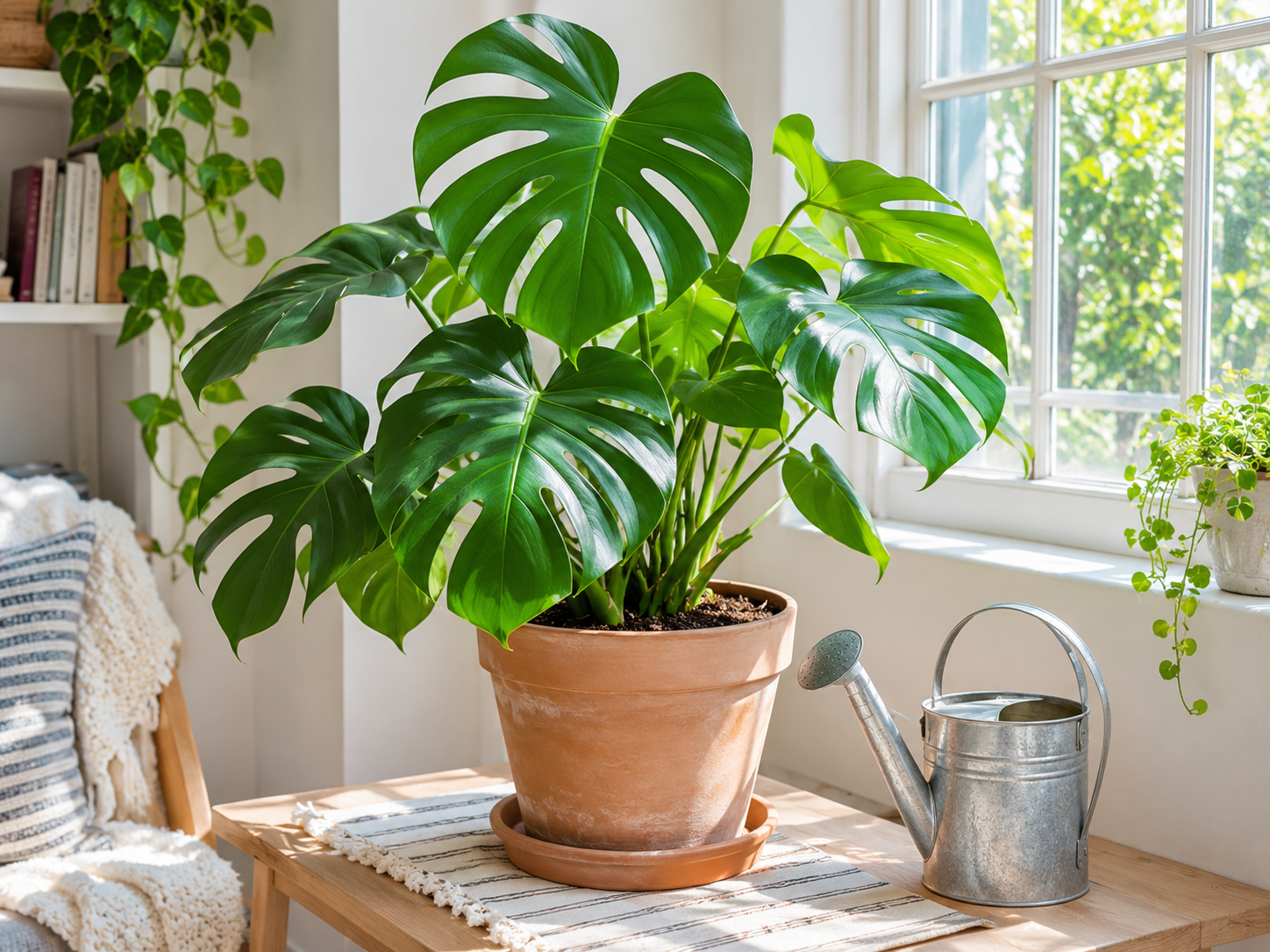
Although irrigation may appear to be the most straightforward aspect of maintaining houseplants, it is the primary cause of domestic plants’ failure or distress. A significant number of novice gardeners either adhere to a rigid calendar schedule, such as watering their plants on Sundays, or provide their plants with tiny amounts of water on a daily basis. Yellow leaves, spongy limbs, or dried-out roots are frequently the result of both behaviors.
Learning how to check your soil and understand what your plant actually needs takes the guesswork out of plant care. This guide walks you through when to water, how much water to use, and how to spot early signs of trouble.
Why a Fixed Watering Schedule Rarely Works
Houseplants do not drink the same amount of water every week. How quickly a pot dries out depends on several changing factors inside your home:
-
- Light exposure: Plants near bright windows use water much faster than plants sitting in dim corners.
- Season and temperature: During warm summer months, plants actively grow and dry out quickly. In cooler winter months, growth slows down and soil stays damp much longer.
- Pot material and size: Terracotta and unglazed clay pots breathe and dry out faster than plastic or glazed ceramic pots. Larger pots also hold moisture longer than small ones.
- Airflow and humidity: Ceiling fans, air conditioners, and room heaters dry out topsoil faster than humid rooms.
Instead of watching the calendar, get into the habit of checking the soil directly.
Step 1: Check the Soil Before You Water
Before picking up your watering can, test the moisture level inside the pot. You can use one of these three simple methods:
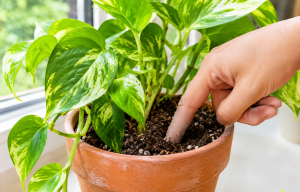
1. The Finger Test
Push your index finger about 1 to 2 inches (roughly down to your second knuckle) into the potting mix.
-
- If the soil feels damp or sticks to your finger, wait a few more days.
- If the soil feels dry and crumbly at that depth, it is time to water.
2. The Wooden Chopstick or Skewer Method
For deeper pots, insert a plain wooden chopstick or bamboo skewer all the way to the bottom and pull it back out.
-
- If it comes out dark or with moist soil clinging to it, hold off on watering.
- If it comes out clean and dry, your plant needs water.
3. The Pot Weight Check
Lift the pot right after watering to feel how heavy it is when saturated. Lift it again a few days later. Once you know the difference between a heavy wet pot and a lightweight dry pot, you can tell when a plant is thirsty just by picking it up.
Step 2: Water Deeply and Evenly
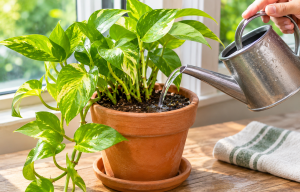
When your plant is ready for water, avoid pouring just a tiny splash on the surface. Shallow watering only wets the top inch of soil, leaving the deeper roots dry and weak.
Follow this simple routine instead:
-
- Use room-temperature water: Cold water straight from a chilly tap can shock sensitive tropical roots. Let tap water sit in a watering can for a few hours if possible.
- Pour slowly around the soil surface: Move the spout around the base of the plant so the entire root ball gets soaked evenly, rather than pouring into one single spot.
- Water until it drains out the bottom: Keep pouring gently until excess water begins dripping out of the drainage holes at the bottom of the pot. This ensures moisture reaches the deepest roots and helps flush out built-up mineral salts.
- Empty the saucer after 15 to 20 minutes: Never let a houseplant sit in a puddle of standing water. Leaving roots submerged cuts off oxygen and invites root rot.
Step 3: Match Watering Habits to Your Plant Type
While checking the soil works for almost every houseplant, different plant groups prefer slightly different moisture levels:
-
- Tropical foliage plants (Pothos, Peace Lily, Monstera, Philodendron): Let the top 1 to 2 inches of soil dry out between waterings. Peace lilies and fittonias will slightly droop when thirsty and perk back up shortly after a drink.
- Succulents and Cacti (Snake Plant, ZZ Plant, Jade, Aloe): Allow the soil to dry out completely from top to bottom before watering again. In low light or winter, these plants may only need water once every 3 to 4 weeks.
- Moisture-loving plants (Ferns, Calathea, Parlor Palm): Keep the soil lightly moist—similar to a wrung-out sponge—without letting it become soggy or bone-dry.
Common Signs of Overwatering vs. Underwatering
Both overwatered and underwatered plants can show yellow or drooping leaves, which often confuses beginners. Look closely at these differences:
Signs of Overwatering
-
- Lower leaves turn yellow and feel soft, limp, or mushy.
- The soil stays wet for more than a week and may smell slightly sour or musty.
- Tiny fungus gnats hover around the soil surface.
- Stems near the soil line turn dark brown or black.
How to fix it: Stop watering immediately, move the plant to a brighter spot with good airflow, and check that the drainage holes are not blocked. If the soil stays soggy for days, repot the plant into fresh, well-draining potting mix.
Signs of Underwatering
-
- Leaves look droopy, curled, or dull, and lower leaves turn yellow or brown with dry, crispy edges.
- The potting mix shrinks away from the inside edges of the pot.
- The pot feels unusually light when lifted.
How to fix it: Give the plant a thorough, slow soak. If the soil has become so dry that water runs straight down the sides without soaking in, place the pot in a bowl of room-temperature water for 20 to 30 minutes so the soil can absorb moisture from the bottom up.
Quick Tips for Healthier Watering Habits
-
- Always use pots with drainage holes: Decorative pots without holes trap excess water at the bottom. If you love a pot without holes, keep your plant inside a plastic nursery pot with drainage holes and slip it inside the decorative cover pot.
- Water in the morning when possible: Morning watering gives plants time to absorb moisture during the brightest part of the day and helps wet leaves dry before cooler night temperatures set in.
- Avoid misting as a replacement for watering: Misting adds brief surface moisture to leaves, but roots still rely on proper soil watering.
Final Thoughts
Good watering is less about following strict rules and more about paying attention to your soil. Once you get used to checking the top couple of inches with your finger and watering thoroughly until it drains, your indoor plants will develop stronger roots and healthier foliage year-round.