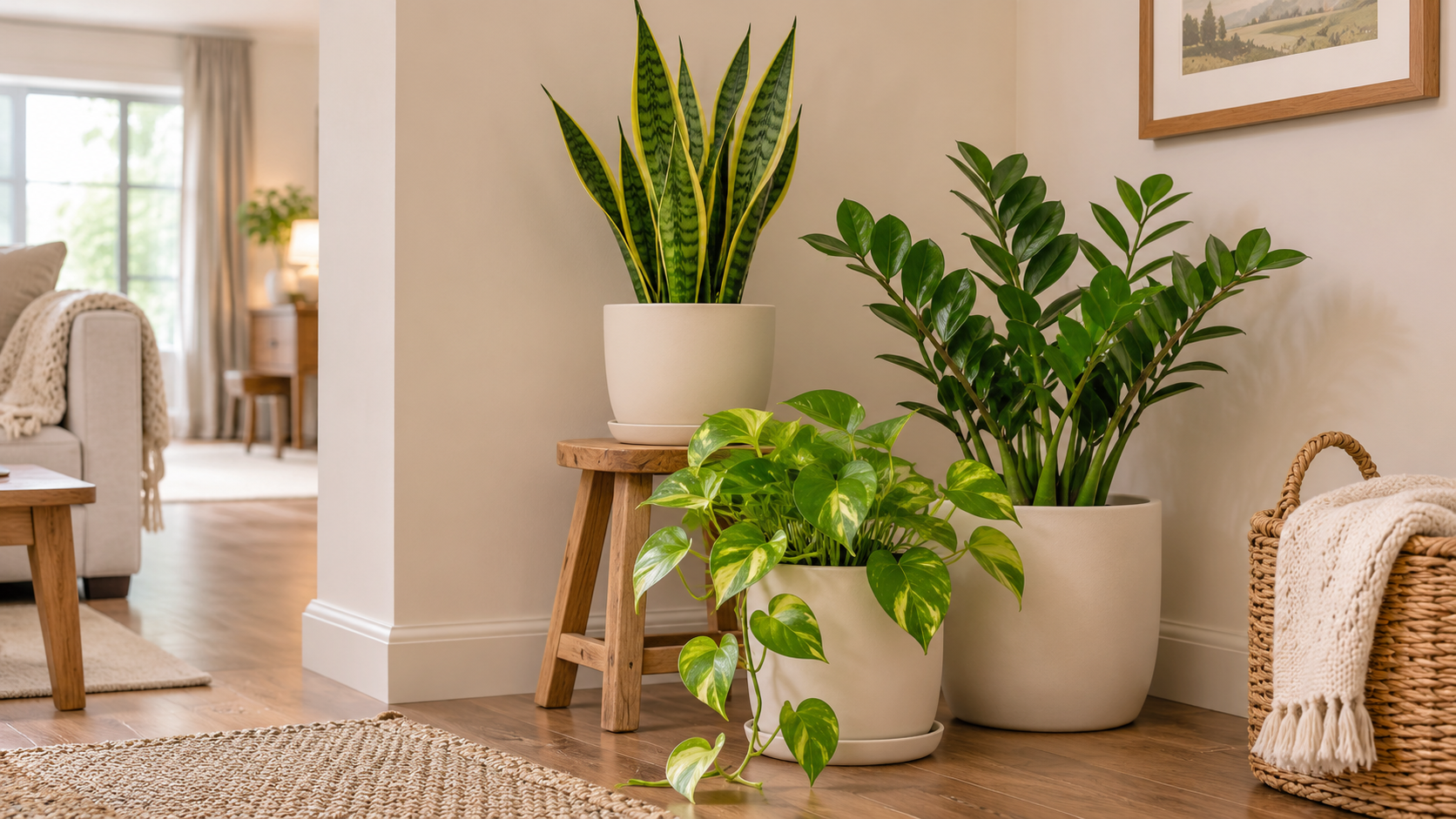
Not all residences are equipped with expansive, south-facing windows. Numerous apartments, dormitories, corridors, and home offices are either situated several feet away from the nearest window or receive only gentle indirect daylight. If you have ever observed a houseplant shed its foliage in a dimly lit room, the issue was likely the selection of a sun-loving plant, rather than a lack of green thumb.
Fortunately, several resilient indoor plants evolved beneath dense tropical canopies, meaning they naturally thrive in lower light conditions. Below are 10 dependable, low-maintenance houseplants that tolerate low light and forgive occasional missed waterings.
What “Low Light” Actually Means for Houseplants
Before picking a plant, it helps to understand what low light means indoors:
-
- Low light is not zero light: Every living plant still needs some natural daylight (or bright indoor artificial light) to photosynthesize. Windowless bathrooms or dark closets will not sustain real plants long-term.
- What a good low-light spot looks like: A north-facing window, a spot 6 to 10 feet away from an east- or west-facing window, or a bright corner shaded by sheer curtains all count as low-light areas.
- Slower growth is normal: In lower light, plants drink less water and grow more slowly. Always check the soil before watering so you do not accidentally overwater them.
1. Snake Plant (Dracaena trifasciata)
The Snake Plant—often called Mother-in-Law’s Tongue—is one of the toughest houseplants available. Its upright, sword-like leaves store water, allowing it to survive weeks of neglect and dim corners without complaining.
-
- Light: Tolerates deep shade to bright indirect light.
- Watering: Let the soil dry out completely between waterings (often every 2 to 4 weeks in low light).
- Beginner tip: Avoid getting water trapped in the center rosette of the leaves, which can cause rot.
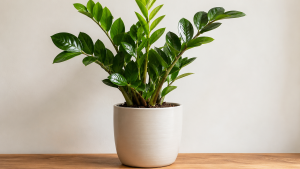
2. ZZ Plant (Zamioculcas zamiifolia)
With its glossy, dark-green leaflets and thick underground rhizomes that store moisture, the ZZ Plant looks almost sculpted. It handles fluorescent office lighting and dim living room corners with ease.
-
- Light: Low to bright indirect light; keep out of harsh direct afternoon sun.
- Watering: Water only when the potting mix is completely dry from top to bottom.
- Beginner tip: Wipe the waxy leaves occasionally with a damp cloth to keep them shiny and dust-free.
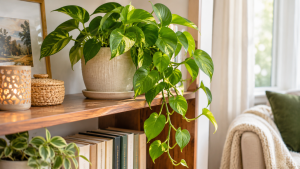
3. Pothos (Epipremnum aureum)
Pothos—also known as Devil’s Ivy—is a fast-growing trailing vine that looks great on shelves, bookcases, or hanging planters. Solid-green varieties like Jade Pothos handle low light even better than heavily variegated types.
-
- Light: Low to medium indirect light.
- Watering: Water when the top 1 to 2 inches of soil feel dry.
- Beginner tip: If the vines grow too long or leggy, trim them just below a leaf node and place the cuttings in water to grow brand-new plants.
4. Cast Iron Plant (Aspidistra elatior)
True to its name, the Cast Iron Plant survives conditions that defeat fussier houseplants, including dim rooms, temperature fluctuations, and irregular watering. Its arching, dark-green leaves add lush height to empty corners.
-
- Light: Low indirect light to deep shade.
- Watering: Water when the top half of the soil dries out.
- Beginner tip: Because it grows slowly, it rarely needs repotting—usually only once every 2 to 3 years.
5. Peace Lily (Spathiphyllum)
If you want a low-light plant that produces elegant white blooms, the Peace Lily is an ideal choice. Better yet, it clearly tells you when it is thirsty by gently drooping its leaves, then bouncing back within hours after a drink.
-
- Light: Low to medium indirect light (flowering is best in medium indirect light).
- Watering: Keep soil lightly moist; water as soon as the top inch dries out.
- Beginner tip: Use filtered or overnight tap water if the leaf tips turn brown, as Peace Lilies can be sensitive to chlorine and fluoride.
6. Chinese Evergreen (Aglaonema)
Chinese Evergreens feature patterned foliage in shades of dark green, silver, and soft grey. Darker green varieties are especially adaptable to dim rooms and low-light apartments.
-
- Light: Low to medium indirect light.
- Watering: Allow the top 2 inches of soil to dry out between waterings.
- Beginner tip: Keep this plant away from cold drafts or chilly air-conditioning vents, as it prefers warm indoor temperatures.
7. Parlor Palm (Chamaedorea elegans)
The Parlor Palm brings a soft, tropical feel to bedrooms and living areas without demanding bright sunlight. It stays compact and grows slowly, making it well suited for tabletops or floor corners.
-
- Light: Low to medium indirect light.
- Watering: Water when the top inch of soil feels dry, keeping the mix lightly moist but never soggy.
- Beginner tip: Avoid over-fertilizing; a light feeding once or twice during spring and summer is plenty.
8. Heartleaf Philodendron (Philodendron hederaceum)
Often confused with Pothos, the Heartleaf Philodendron has velvety, heart-shaped leaves that cascade gracefully from shelves and baskets. It adapts effortlessly to lower light levels.
-
- Light: Low to bright indirect light.
- Watering: Let the top 1 to 2 inches of soil dry before watering thoroughly.
- Beginner tip: Rotate the pot a quarter-turn every couple of weeks so both sides receive even light and grow evenly.
9. Dracaena (Dracaena fragrans / Corn Plant)
Dracaena varieties feature sturdy canes topped with strappy green or striped foliage, making them popular floor plants for offices and living rooms with limited sunlight.
-
- Light: Low to medium indirect light.
- Watering: Let the top half of the potting soil dry out before watering again.
- Beginner tip: Yellowing lower leaves are normal as the plant matures—simply trim them cleanly near the stem.
10. Spider Plant (Chlorophytum comosum)
Spider Plants are cheerful, adaptable houseplants with arching green-and-white striped leaves. They tolerate lower light well and eventually send out long stems bearing baby “spiderettes” that you can pot up and share.
-
- Light: Low to bright indirect light.
- Watering: Water when the top 1 to 2 inches of soil feel dry.
- Beginner tip: Spider Plants prefer slightly snug pots and tolerate occasional missed waterings thanks to their thick, fleshy roots.
Quick Care Tips for Plants in Low-Light Rooms
-
- Cut back on watering: Less light means slower evaporation and slower growth. Always test the soil depth instead of watering on a strict weekly schedule.
- Keep leaves clean: Dust blocks the limited light available in dim rooms. Wipe broad leaves gently with a soft, damp cloth once a month.
- Skip heavy fertilizing: Low-light plants use nutrients slowly. Feed lightly only during active spring and summer growth, or skip fertilizer altogether in winter.
Final Thoughts
You do not need a bright sunroom to enjoy greenery indoors. Starting with tough, shade-tolerant varieties like a Snake Plant, ZZ Plant, or Pothos gives you an easy, rewarding introduction to indoor gardening—even in the dimmest corners of your home.