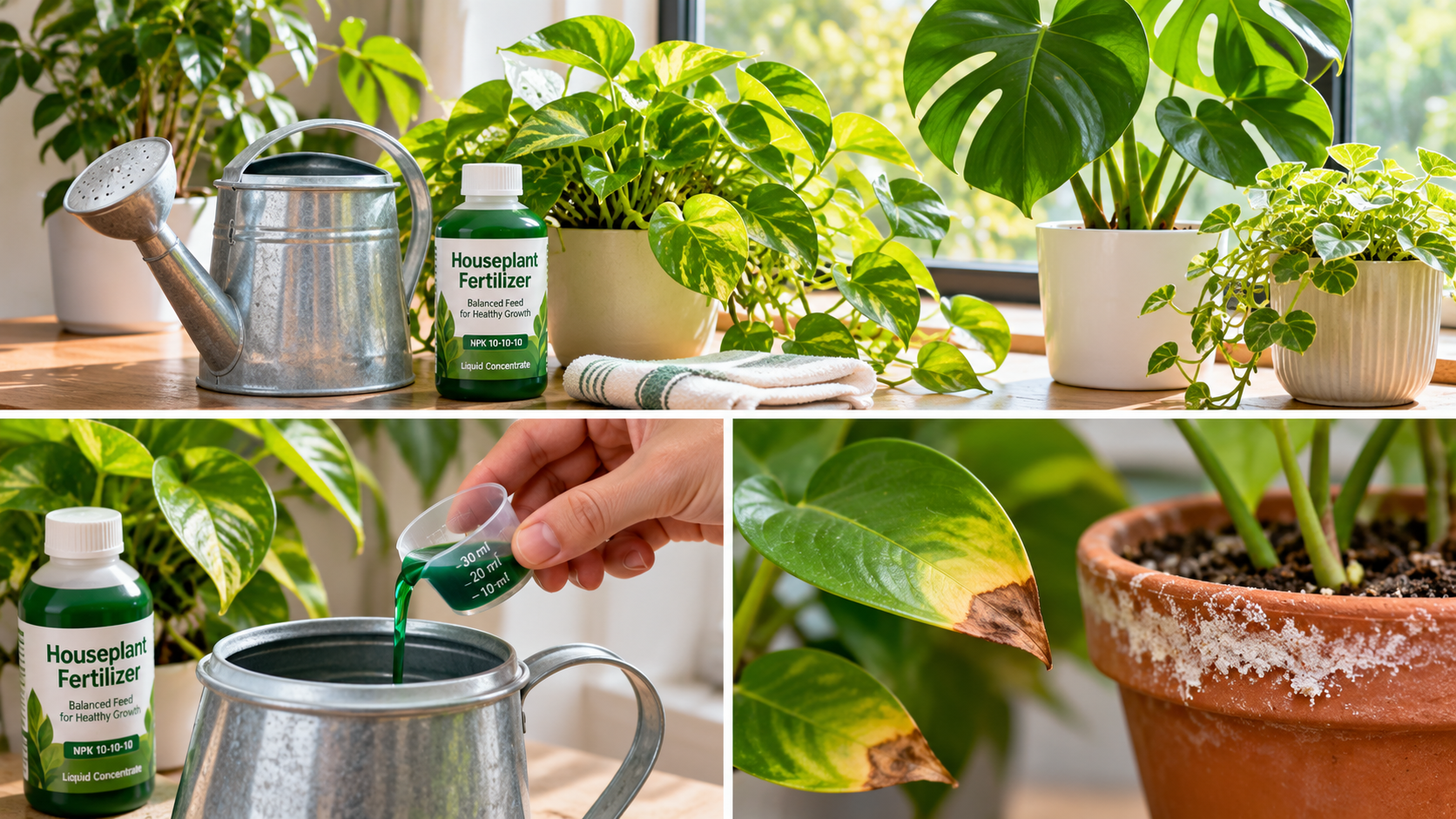
Water and sunlight keep your houseplants alive, but fertilizer is what helps them send out lush new leaves, robust stems, and vibrant color. Unlike plants thriving outdoors in rich garden soil, indoor plants survive in small containers with a limited supply of nutrients. Over time, regular irrigation washes minerals out of the potting mix, leaving your plant famished.
At the same time, over-fertilizing is one of the simplest ways to burn roots and damage healthy foliage. This guide explains when indoor plants actually need food, how to read fertilizer labels without confusion, and a simple feeding routine any novice can follow safely.
Do Indoor Plants Really Need Fertilizer?
Yes, though far less often than most beginners assume. Think of fertilizer as a multivitamin rather than main food—plants make their real energy from sunlight through photosynthesis, while fertilizer supplies essential minerals like nitrogen, phosphorus, and potassium.
-
- When plants need feeding: During active growth in spring and summer, when days are longer and new leaves are emerging.
- When plants do not need feeding: During autumn and winter, when lower light slows down growth and most houseplants rest.
- Newly potted plants: Fresh bagged potting mix already contains enough nutrients to last 2 to 3 months, so hold off on fertilizing newly repotted plants at first.
Understanding NPK Numbers on Fertilizer Bottles
Every houseplant fertilizer label displays three numbers separated by dashes—such as 10-10-10, 20-20-20, or 3-1-2. These stand for NPK, the three primary nutrients plants use:
-
- N (Nitrogen): Encourages healthy green leaf and stem growth. Foliage houseplants like Pothos, Monstera, and Philodendron love slightly higher nitrogen.
- P (Phosphorus): Supports strong root development and flower production.
- K (Potassium): Strengthens overall plant immunity, water regulation, and stress tolerance.
For most everyday houseplants, a balanced liquid fertilizer (such as 10-10-10 or 20-20-20) diluted properly works reliably without guesswork.
Choosing the Best Type of Fertilizer for Houseplants
You will see several formats at garden centers, each with simple pros and cons:
1. Liquid Houseplant Fertilizer (Best for Beginners)
Liquid concentrates mix directly into your watering can, giving you complete control over strength and timing. If a plant reacts poorly, nutrients flush out easily with plain water.
2. Slow-Release Granules or Pellets
Small coated pellets sit on top of the soil and release tiny amounts of nutrients each time you water over 3 to 6 months. They are convenient for busy plant owners, though harder to adjust quickly if you add too much.
3. Organic Options (Worm Castings & Seaweed Extract)
Earthworm castings and diluted liquid kelp/seaweed feed plants gently without any risk of chemical root burn. Mixing a spoonful of worm castings into the top inch of soil every couple of months is an easy, natural boost.
Step-by-Step: How to Fertilize Indoor Plants Safely
Step 1: Water With Plain Water First
Never pour fertilizer onto bone-dry potting soil. Dry roots absorb concentrated minerals too fast, which causes fertilizer burn. Give your plant a light drink of plain water a few hours before feeding, or make sure the soil is already slightly damp.
Step 2: Dilute to Half Strength
Even when a bottle gives full-strength instructions, diluting liquid fertilizer to half strength (or quarter strength for sensitive plants like Calatheas and Ferns) is much safer indoors. More fertilizer does not make plants grow faster—it only builds up harmful salts in the pot.
Step 3: Apply Evenly Around the Soil
Pour the diluted fertilizer mixture slowly around the base of the plant until excess liquid begins dripping out of the drainage holes. Empty the saucer after 15 to 20 minutes so roots do not sit in concentrated nutrient water.
Step 4: Follow a Simple Seasonal Schedule
-
- Spring and Summer: Feed once every 3 to 4 weeks with half-strength liquid fertilizer.
- Autumn and Winter: Stop fertilizing completely until early spring returns.
4 Signs You Are Over-Fertilizing Your Plants
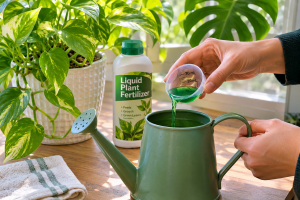
If you feed too often or mix the solution too strong, your plant will quickly show warning signs:
-
- Brown, crispy leaf tips and edges even when watering is on schedule.
- A white or yellowish mineral crust building up on the soil surface or around terracotta pot rims.
- Sudden leaf drop or limp, darkened roots.
- Stunted, distorted new growth during warm weather.
How to fix fertilizer burn: Carry the plant to a sink or bathtub and slowly pour plain, lukewarm water through the pot for several minutes so excess fertilizer salts flush completely out of the bottom drainage holes. Trim away crispy brown leaf tips with clean scissors and skip fertilizer for at least two months.
Final Thoughts
Fertilizing indoor plants works best when you keep it light and seasonal. Feeding half-strength liquid fertilizer once a month during spring and summer—and giving your plants a break in winter—provides all the nutrition they need for steady, healthy growth without risking root burn.