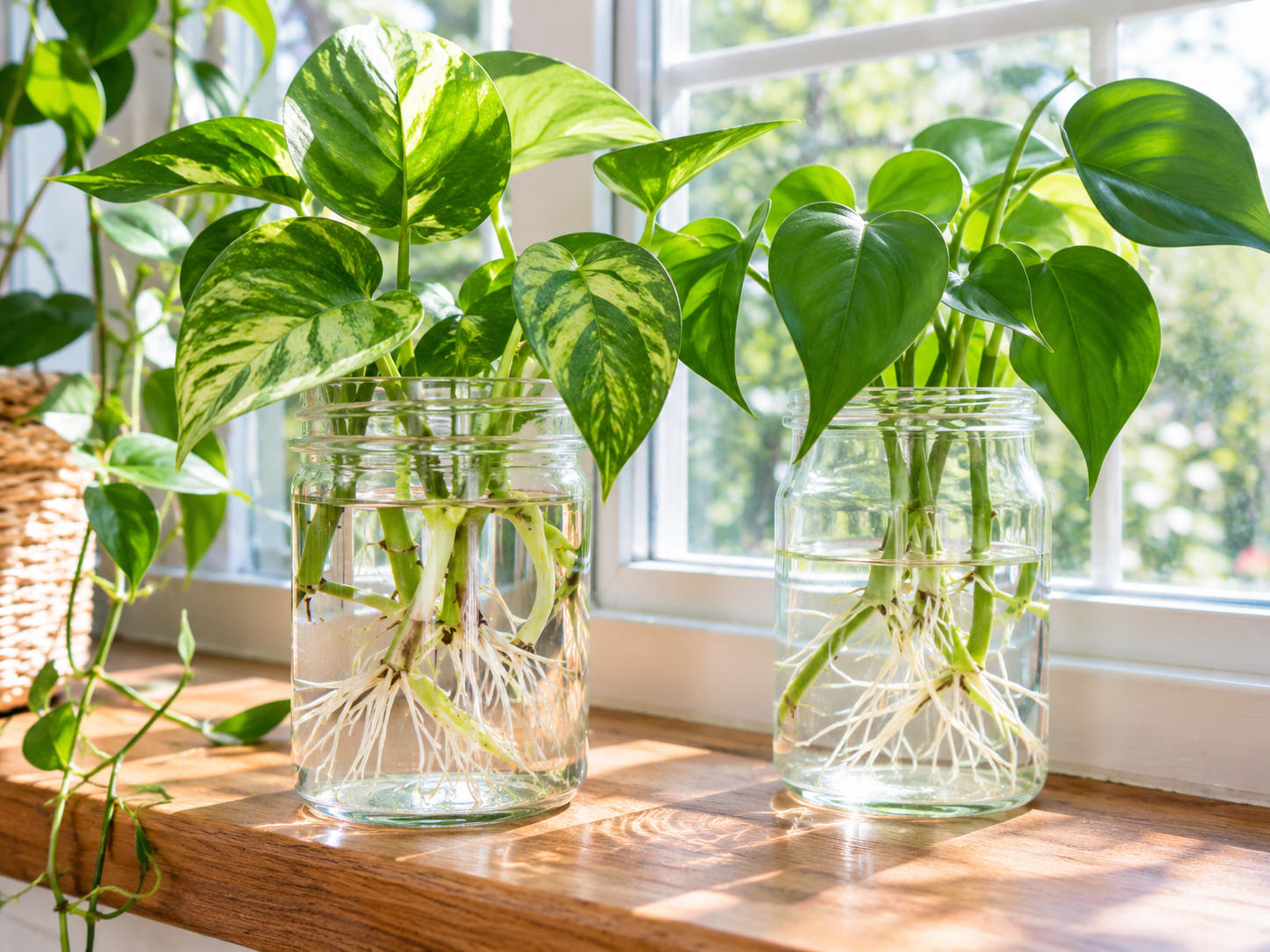
Propagating houseplants is one of the most rewarding talents you can acquire as an indoor gardener. Instead of purchasing new plants every time you want to fill an empty shelf or share greenery with a friend, you can grow brand-new plants from cuttings taken directly off your existing favorites.
Water propagation is the simplest method for novices because you can observe the roots grow day by day inside a clear glass jar. This guide walks you through which indoor plants root best in water, where to make your incision, and how to transfer your rooted cuttings into soil without shocking them.
Best Indoor Plants to Propagate in Water
Not every houseplant can grow from a simple stem cutting, so starting with easy, fast-rooting varieties sets you up for success. These popular houseplants root reliably in plain water:
-
- Pothos (Epipremnum aureum): Roots within 1 to 2 weeks and tolerates almost any beginner mistake.
- Heartleaf Philodendron: Grows healthy white roots quickly from trailing stems.
- Monstera Deliciosa & Monstera Adansonii: Roots easily as long as each cutting includes a stem node.
- Spider Plant: Produces tiny “baby” plantlets on long runners that root within days in water.
- Tradescantia (Inch Plant): One of the fastest-rooting houseplants, often showing roots in 4 to 7 days.
- Coleus & Begonias: Easy-going foliage plants that root quickly on a bright windowsill.
Understanding the Most Important Part: The Leaf Node
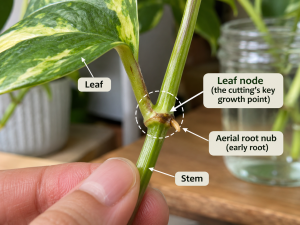
Before picking up your scissors, look closely at your plant’s stem. You will notice small bumps, joints, or rings along the stem where leaves attach—these are called nodes.
-
- Why nodes matter: New roots only grow from a node, never from the middle of a smooth green stem or a bare leaf stalk.
- What to look for: On vining plants like Pothos and Monstera, nodes often have tiny brown nubs (aerial roots) already visible. Make sure every cutting you take has at least one or two healthy nodes.
What You Will Need
You do not need fancy equipment to propagate plants in water:
-
- Clean, sharp scissors or pruning shears (wipe the blades with rubbing alcohol first to prevent spreading plant diseases).
- A clear glass jar, vase, or drinking glass so you can monitor root growth and water clarity.
- Room-temperature water (filtered water or tap water left sitting out overnight works well).
Step-by-Step: How to Propagate Stem Cuttings in Water
Step 1: Choose a Healthy Stem
Pick a vigorous, healthy stem with bright green leaves and no signs of pests or yellowing. Avoid taking cuttings from a plant that is already stressed or sick.
Step 2: Cut Just Below a Node
Measure about 4 to 6 inches down from the tip of the stem. Make a clean, angled cut about quarter to half an inch below a leaf node.
Step 3: Remove Lower Leaves
Gently pinch or snip off any leaves sitting near the bottom of your cutting so that no leaves sit underwater. Submerged leaves rot quickly, turning the water cloudy and encouraging bacteria. Keep 2 or 3 healthy leaves at the top of the stem so the cutting can still absorb light.
Step 4: Place the Cutting in Water
Set your cutting inside your clear glass jar and add enough room-temperature water to cover the bottom node completely. Keep the top leaves dry and resting above the rim of the glass.
Step 5: Place in Bright, Indirect Light
Set your propagation jar near an east- or north-facing window, or a few feet back from a sunny south- or west-facing window. Avoid harsh direct afternoon sun, which can overheat the water and cook tender new roots.
Step 6: Refresh the Water Every 5 to 7 Days
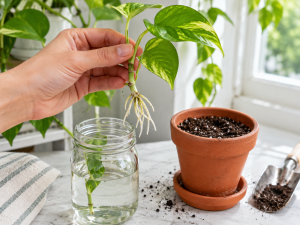
Empty out the old water once a week (or sooner if it looks cloudy or slimy) and refill the jar with fresh room-temperature water. Fresh water brings dissolved oxygen that helps roots grow faster and prevents rot.
When and How to Move Water-Rooted Cuttings Into Soil
Within 2 to 4 weeks, you should see crisp white roots branching out from the node. Once the roots reach about 1 to 2 inches long, your cutting is ready for potting soil:
-
- Pick a small pot with drainage holes: A 3- or 4-inch nursery pot works best so excess soil does not stay soggy.
- Use light, well-draining indoor potting mix: Fill the pot halfway with moistened indoor soil, gently hold the rooted cutting in the center, and fill around the roots without pressing down too hard.
- Keep the soil slightly moister for the first week: Roots grown in water are softer than soil roots. Keep the potting mix lightly moist (never waterlogged) for the first 7 to 10 days while the roots adjust to soil, then transition to your normal watering routine.
Common Water Propagation Mistakes to Avoid
-
- Leaving leaves submerged in the jar: Always strip lower leaves so only bare stem and nodes sit underwater.
- Waiting too long to pot: If roots grow 6 to 8 inches long in water, they adapt much more slowly to soil than 1- to 2-inch roots.
- Using an oversized pot: Planting a single small cutting into a large pot leads to soggy soil and root rot. Start small and size up later.
Final Thoughts
Water propagation turns a single healthy houseplant into an entire indoor collection for free. Once you learn how to spot a leaf node, keep your jar in bright indirect light, and refresh the water weekly, you can multiply your favorite Pothos, Philodendrons, and Monsteras with confidence.