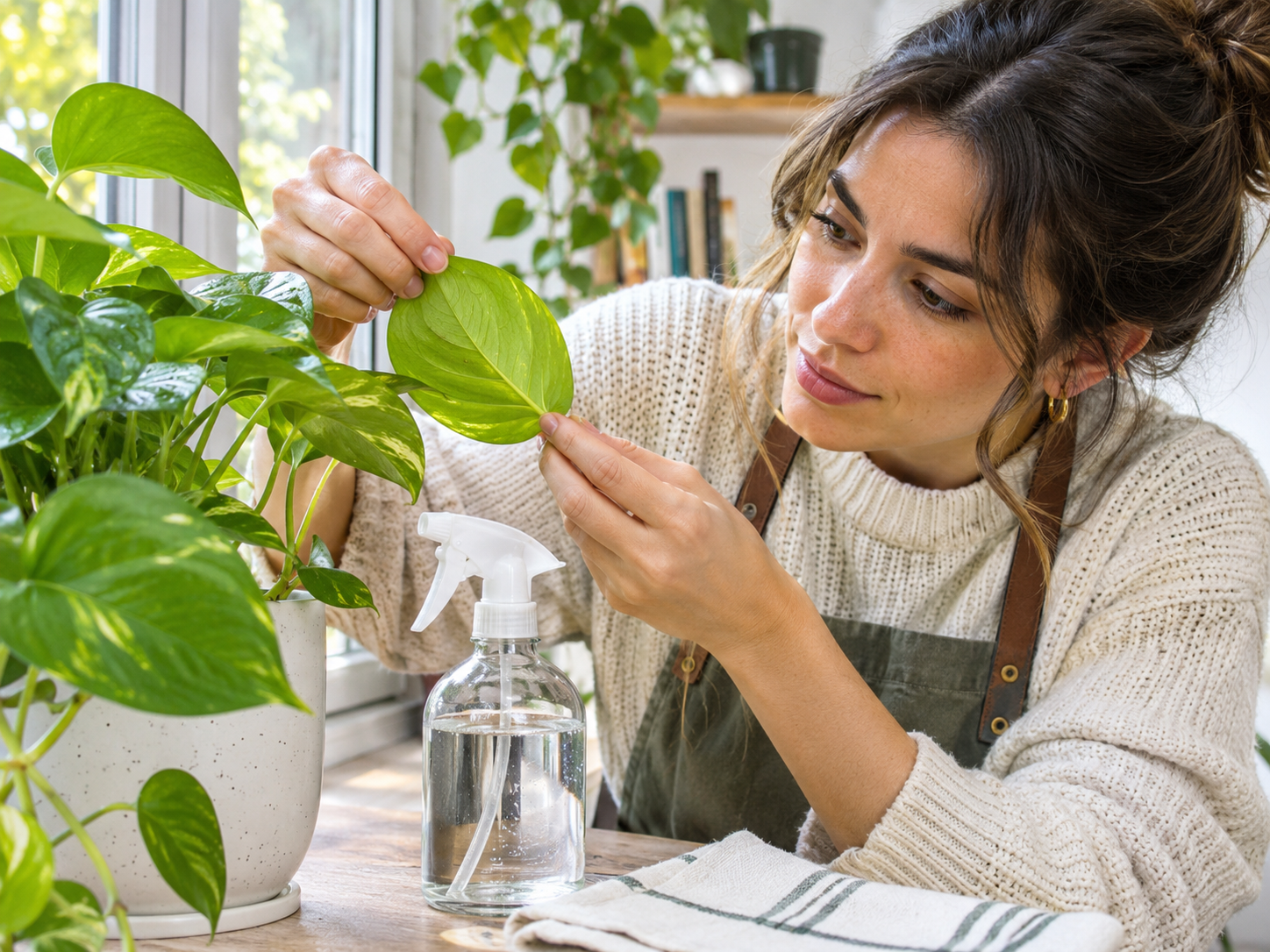
Even if you keep your home spotless, microscopic vermin can still find their way onto your houseplants. They often appear on a newly purchased plant, take a ride through an open window, or emerge from moist potting soil. Left untreated, insects like fungus gnats, spider mites, and mealybugs suck sap from foliage, weaken new growth, and spread rapidly to adjacent containers.
The good news is that you rarely need toxic chemical treatments indoors. Catching parasites early and treating them with mild, household-friendly methods is usually enough to save your plants. This guide demonstrates you how to identify the 5 most common houseplant pests and eradicate them safely at home.
Step 1: Isolate the Affected Plant Immediately
The moment you notice bugs, webbing, or sticky residue on a houseplant, move it away from your other plants. Place it in a separate room, bathroom, or quiet corner with decent light while you treat it. Isolating one plant takes ten seconds and prevents a small problem from turning into a collection-wide infestation.
5 Most Common Indoor Plant Pests (and How to Spot Them)
Before treating a plant, look closely under the leaves, along the stems, and on the soil surface to identify which pest you are dealing with.
1. Fungus Gnats
-
- What they look like: Tiny, dark, mosquito-like flies hovering around the soil or flying near your face when you water your plants.
- Why they appear: Adult gnats lay eggs in damp, organic potting mix. Their tiny larvae feed on fungi and tender roots beneath the surface.
- Best natural fix: Let the top 2 inches of soil dry out completely between waterings, as larvae cannot survive in dry soil. Place yellow sticky traps near the soil surface to catch flying adults, and sprinkle a thin layer of cinnamon or horticultural sand on top of the soil to discourage egg-laying.
2. Spider Mites
-
- What they look like: Microscopic specks (red, brown, or pale yellow) on the undersides of leaves, accompanied by fine, silky webbing between stems and leaf tips. Leaves often look speckled, dusty, or dull.
- Why they appear: Spider mites love warm, dry indoor air—especially near heaters or sunny windows.
- Best natural fix: Rinse the plant thoroughly in the shower or sink with lukewarm water to knock mites off the foliage. Afterward, spray the tops and undersides of all leaves with diluted neem oil or insecticidal soap, and increase room humidity around the plant.
3. Mealybugs
-
- What they look like: Small, flat, white insects covered in a fuzzy, cotton-like coating. They cluster in leaf joints, stem crevices, and the undersides of leaves.
- Why they appear: They frequently hide on new nursery plants and feed on plant sap, leaving behind sticky “honeydew.”
- Best natural fix: Dip a cotton swab in 70% isopropyl rubbing alcohol and touch each white bug directly—the alcohol dissolves their waxy coating on contact. Follow up by wiping down the stems and leaves with a damp cloth.
4. Scale Insects
-
- What they look like: Tiny, stationary brown or tan bumps stuck tightly to stems and leaf veins. Beginners often mistake them for natural bark spots or scabs until the leaves turn sticky.
- Why they appear: Scale insects latch onto woody stems (such as Fiddle Leaf Figs, Rubber Plants, and Palms) and slowly drain sap.
- Best natural fix: Gently scrape the bumps off using a soft toothbrush, a fingernail, or a cotton swab dipped in rubbing alcohol. Then coat the stems and leaves with neem oil spray to smother any remaining crawlers.
5. Aphids
-
- What they look like: Small, soft-bodied pear-shaped insects (green, black, yellow, or pink) clustered tightly on tender new shoots and flower buds.
- Why they appear: Aphids enter through open windows or on outdoor herbs brought indoors, causing new leaves to curl or distort.
- Best natural fix: Spray the plant with a strong, gentle stream of water to dislodge the clusters, then apply a mild soapy water spray or neem oil every 5 to 7 days until they are gone.
3 Safe, Natural Remedies That Actually Work
You only need two or three basic supplies to handle almost every indoor plant pest:
1. Cold-Pressed Neem Oil Spray
Neem oil is a plant-based oil that disrupts insect feeding and reproduction without harming indoor air quality.
-
- How to mix: Combine 1 teaspoon of cold-pressed neem oil and half a teaspoon of mild liquid dish soap (to help the oil mix with water) in 1 liter (about 4 cups) of lukewarm water. Shake well before each use.
- How to apply: Spray all leaf surfaces—especially the undersides—in the evening or out of direct sunlight so wet leaves do not scorch. Repeat once every 7 days for 3 weeks.
2. Mild Dish Soap Spray (Insecticidal Soap)
A simple soapy spray suffocates soft-bodied pests like spider mites and aphids on contact.
-
- How to mix: Stir 1 teaspoon of pure liquid castile soap (avoid harsh degreasers or bleach-based soaps) into 1 liter of water.
- How to apply: Mist the affected foliage thoroughly, wait 2 to 3 hours, and rinse the leaves gently with plain water so soap residue does not clog leaf pores.
3. 70% Rubbing Alcohol Spot Treatment
Rubbing alcohol works quickly on visible pests like mealybugs and scale without soaking the soil.
-
- How to apply: Dab individual bugs with an alcohol-soaked cotton swab. Always test a small hidden leaf first on delicate plants like ferns or calatheas to make sure the foliage tolerates it.
How to Prevent Pests From Returning
-
- Quarantine every new plant: Keep newly bought houseplants separate from your existing collection for 2 weeks while checking under their leaves every few days.
- Avoid overwatering: Soggy soil is the main invitation for fungus gnats. Always test the top 1 to 2 inches of soil before watering.
- Wipe leaves regularly: Dusting broad leaves with a damp cloth once a month removes early pest eggs and keeps foliage healthy.
- Inspect before bringing plants indoors: If you move houseplants outside for summer, rinse the foliage and check the pot drainage holes thoroughly before bringing them back inside.
Final Thoughts
Finding bugs on your houseplants feels frustrating, but almost every common pest is manageable if you spot it early. Isolating the plant, rinsing away surface insects, and applying a gentle neem oil or soap treatment once a week for a few weeks will clear out pests and keep your indoor garden thriving.