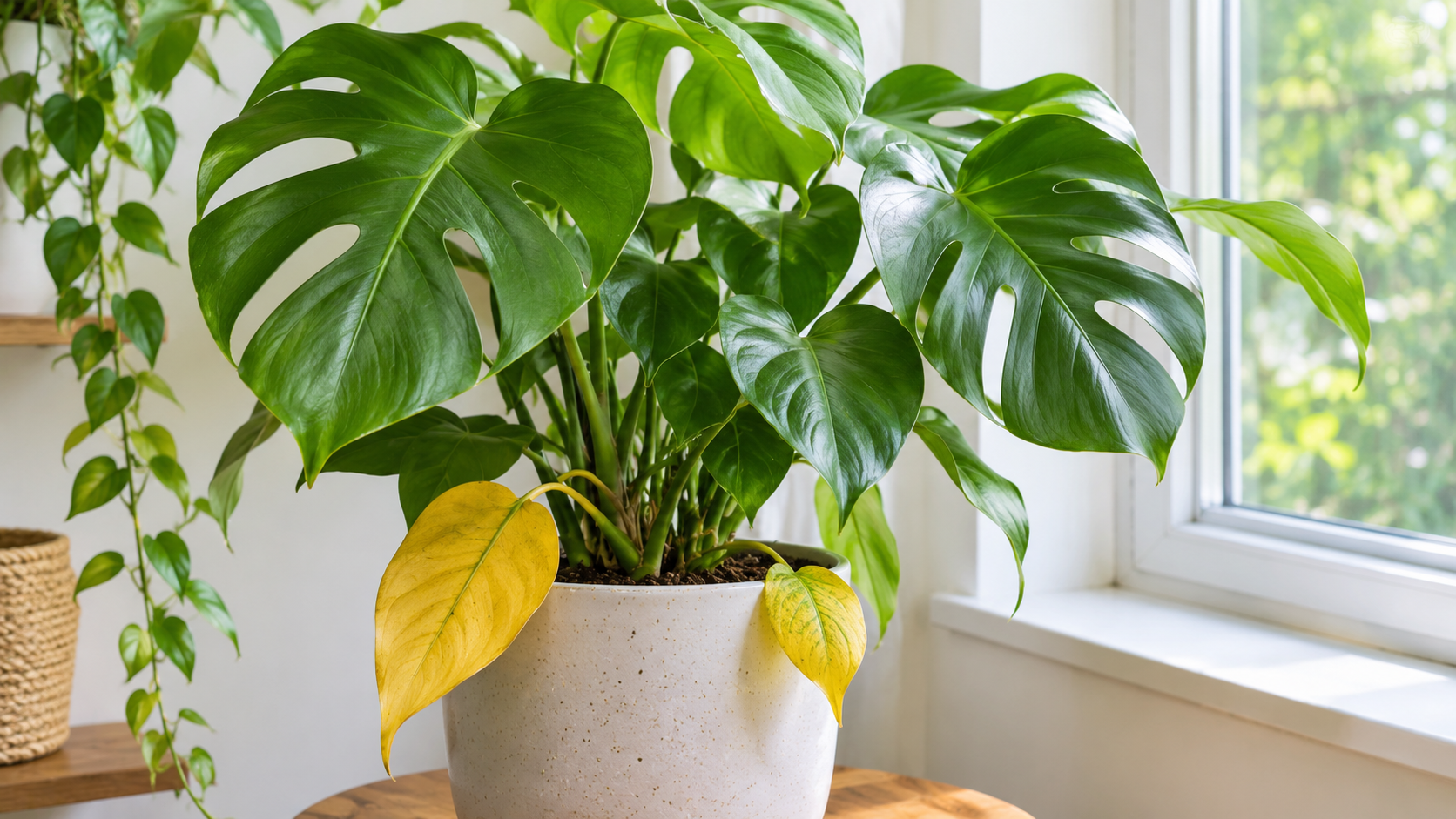
Few things concern a new plant owner quicker than noticing yellow leaves on a healthy houseplant. While seeing vibrant green foliage fade to yellow feels alarming, it is simply your plant’s method of signifying that something in its environment needs a small adjustment.
In most cases, yellow leaves are simple to fix once you look attentively at where the yellowing begins and how the leaves feel. Below are the 7 most common reasons indoor plant leaves turn yellow—and what you can do to bring your plant back on track.
1. Overwatering (The Most Common Cause)
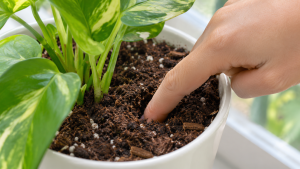
Too much water is the number one culprit behind yellow leaves. When potting soil stays soggy for too long, air pockets disappear and roots cannot breathe. Damaged roots stop sending water and nutrients upward, causing leaves to turn yellow and drop.
-
- What it looks like: Lower leaves turn yellow and feel soft, limp, or mushy. The soil feels wet deep down, and the pot feels heavy.
- How to fix it: Stop watering until the top 1 to 2 inches of soil dry out completely. Make sure your pot has clear drainage holes and empty any standing water from the saucer. If the soil smells sour or stays waterlogged, repot the plant into fresh, airy potting mix and trim away any dark, mushy roots.
2. Underwatering
Going too long between waterings stresses a plant just as much as drowning it. Without enough moisture, a plant pulls water from its older lower leaves to protect new growth at the top.
-
- What it looks like: Leaves look droopy or dull, turning yellow with dry, brown, crispy edges. The soil often shrinks away from the inside walls of the pot.
- How to fix it: Water thoroughly until excess water drains out the bottom. If bone-dry soil repels water, set the pot in a bowl of room-temperature water for 20 to 30 minutes so the roots can soak up moisture evenly from below.
3. Not Enough Light (or Too Much Direct Sun)
Light drives photosynthesis, which gives leaves their rich green color. Moving a plant into a spot that is too dim—or suddenly placing a shade-loving plant in harsh afternoon sun—can trigger yellowing.
-
- What it looks like: In low light, leaves on the shaded side of the plant turn pale yellow and drop, while stems stretch toward the nearest window. In harsh direct sun, leaves develop bleached yellow or scorched brown patches on the side facing the glass.
- How to fix it: Move low-light plants closer to an east- or north-facing window, or filter harsh afternoon rays with a sheer curtain. Rotate your pots a quarter-turn every couple of weeks so all sides receive even daylight.
4. Cold Drafts or Sudden Temperature Changes
Most popular houseplants come from warm tropical climates and dislike sudden temperature swings. Placing a plant right beside an air-conditioning vent, room heater, or drafty winter window can shock its foliage.
-
- What it looks like: Leaves suddenly turn yellow or brown and drop soon after a weather shift or moving the plant to a new room.
- How to fix it: Keep indoor plants away from direct blasts of hot or cold air. Aim for steady room temperatures between 18°C and 27°C (65°F to 80°F) and avoid placing tender leaves directly against cold window glass.
5. Low Indoor Humidity
Tropical houseplants like Calathea, Ferns, Peace Lilies, and Monstera thrive in moderate humidity. Dry indoor air—especially in rooms with air conditioning or winter heating—causes moisture to evaporate from leaves faster than roots can replace it.
-
- What it looks like: Leaf tips and margins turn yellow first, then dry into crispy brown edges.
- How to fix it: Group several houseplants together to create a slightly more humid microclimate, place the pot on a shallow tray of pebbles and water (keeping the pot bottom above the water line), or run a small room humidifier nearby.
6. Nutrient Deficiency (or Too Much Fertilizer)
If a plant has lived in the same potting soil for over a year without fresh nutrients, it can run low on nitrogen, iron, or magnesium. On the other hand, feeding too heavily builds up fertilizer salts that burn roots.
-
- What it looks like: Older lower leaves turn pale yellow all over while veins may stay green (nutrient deficiency), or leaf tips turn yellow and crispy with a white crust on the soil surface (fertilizer burn).
- How to fix it: During spring and summer, feed lightly once a month with a balanced liquid houseplant fertilizer diluted to half strength. Skip fertilizer in winter. If you suspect over-fertilizing, flush the soil slowly with plain water until it drains out the bottom to wash away excess salts.
7. Natural Aging of Old Leaves
Not every yellow leaf means something is wrong. Just like humans shed hair, healthy houseplants naturally retire their oldest bottom leaves to focus energy on fresh new growth at the top.
-
- What it looks like: Only one or two older leaves right at the base of the stem turn yellow, while the rest of the plant looks firm, vibrant, and actively growing.
- How to fix it: Simply snip the yellow leaf off cleanly near the main stem using clean scissors or pruning shears. No other treatment is needed.
Should You Cut Off Yellow Leaves?
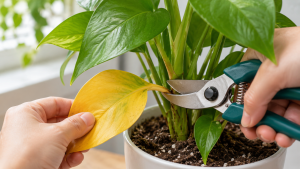
Yes. Once a houseplant leaf turns fully yellow, it will not turn green again. Trimming off yellow leaves with clean scissors keeps your plant looking tidy, improves airflow around the stems, and allows the plant to direct its energy toward healthy new foliage.
Final Thoughts
When you spot a yellow leaf, resist the urge to immediately pour more water into the pot. Check the soil moisture with your finger first, look at the light and nearby vents, and notice whether the yellowing is on old bottom leaves or all over the plant. A quick check usually reveals the exact cause—and a small routine tweak will keep your houseplants green and thriving.