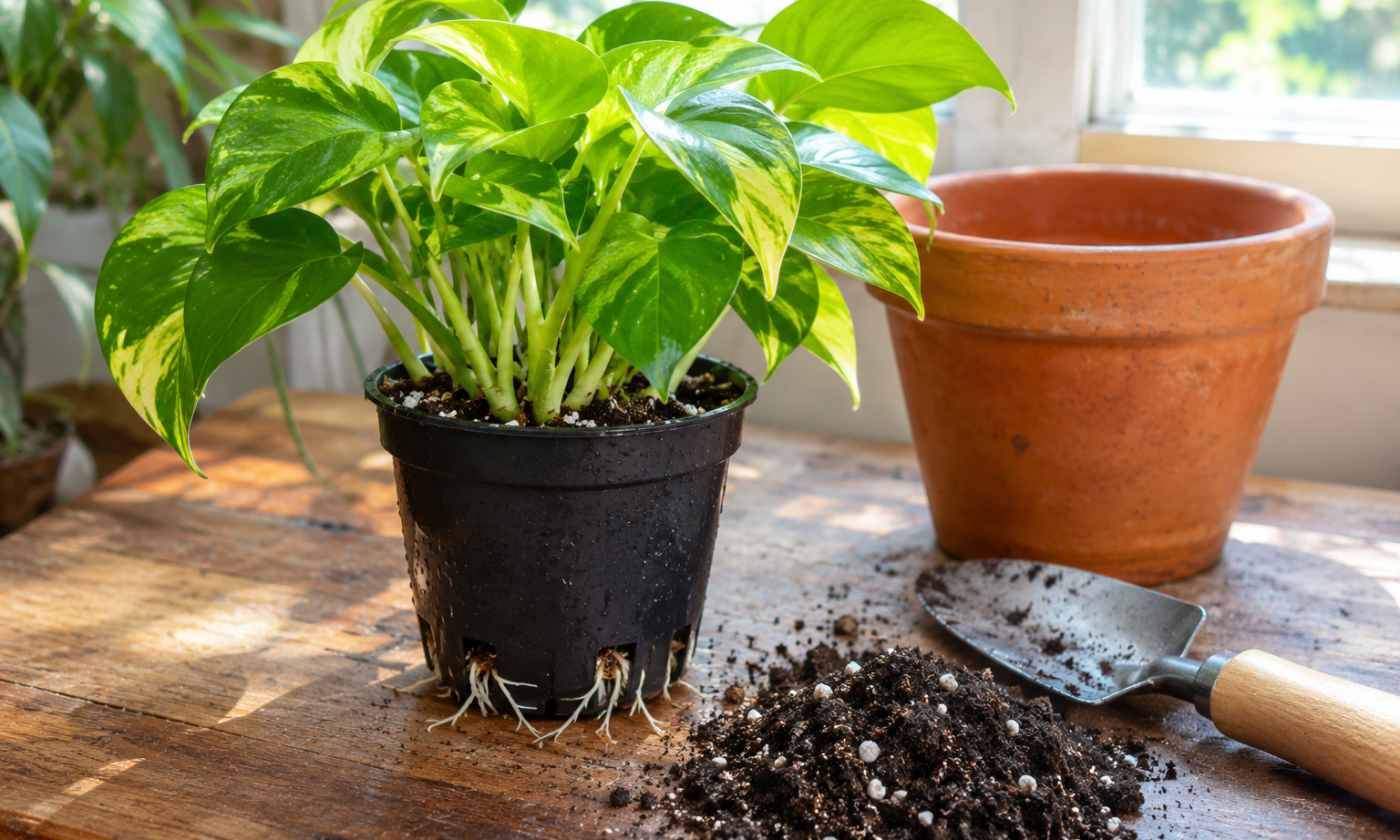
Last spring, I kept watering a four-year-old snake plant every five days because its soil went bone-dry overnight, only to find the plastic nursery pot cracked clean down the side from root pressure. I had waited at least eight months too long to move it up a size.
Knowing when to repot saves you from stunted growth, constant wilting, and root-bound stress—without disturbing a plant that is still happy where it sits. Here are the five clearest root and soil signs I check before buying a single bag of potting mix.
Quick Summary: What You Need for a Root Check
- A clean chopstick or wooden skewer: For probing soil density without snapping thick roots.
- An old towel or newspaper: To lay on your table when sliding the root ball out for a visual check.
- A ruler or tape measure: To check if the next pot is 1 to 2 inches wider than the current container.
- Room-temperature water: Used a day ahead so dry soil holds together instead of crumbling off fragile feeder roots.
Sign 1: Roots Poking Out of the Drainage Holes (or Pushing Above the Soil)
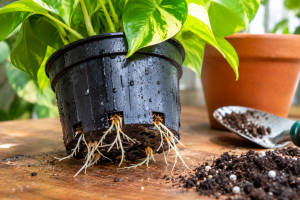
Flip the pot over or tilt it gently to inspect the bottom drainage holes. If thick white or tan roots are curling out the bottom like tangled shoelaces, the root system has run out of room inside.
Look at the top surface of the potting mix, too. When roots start circling tightly on top of the soil or lifting the entire root ball half an inch above the pot rim, the container is packed full.
One stray root hair peeking out of a hole is normal, especially if your pot sits in a pebble tray. Wait until multiple thick roots emerge or start wrapping around the base before you repot.
Sign 2: Soil Dries Out in 24 to 48 Hours
A healthy indoor plant in an average 6-inch pot usually takes 5 to 8 days to dry out in moderate room temperatures (68°F to 75°F). When a pot turns root-bound, roots displace almost all the soil that normally holds moisture.
You will notice water rushing straight through the drainage holes two seconds after you pour it in. Even after a thorough soak, the pot feels feather-light again within a day or two, and the leaves droop every few days.
Probe the soil two inches down with a wooden skewer. If the stick hits a hard, impenetrable wall of roots instead of soft potting mix, it is time to upgrade.
Sign 3: The Plant Turns Top-Heavy and Tips Over Easily
Tall growers like monstera, rubber trees, fiddle leaf figs, and mature dracaenas eventually outgrow lightweight plastic nursery pots. When the foliage above weighs twice as much as the cramped root ball below, the slightest brush knocks the whole pot sideways.
Check how the stem sits inside the pot. If the trunk leans at an angle or the lightweight plastic container bulges out of round into an oval shape, the roots are physically pushing against the walls.
Moving a top-heavy plant into a heavier terracotta or ceramic pot that is 2 inches wider restores balance right away.
Sign 4: Growth Stalls Completely During Spring and Summer
Most indoor plants push out fresh leaves steadily from March through September when given bright indirect light. If your plant sits in good light, gets regular water, and still produces zero new leaves—or pushes out tiny, stunted leaves—crowded roots are usually the culprit.
Check the older lower leaves as well. When a plant runs out of root space and stored soil nutrients, it pulls energy from its oldest bottom leaves, causing them to turn pale yellow and drop one after another.
Before assuming it needs a bigger pot, rule out two things: make sure the pot gets at least 4 to 6 hours of bright indirect light, and check if you have fed it diluted fertilizer in the last six months.
Sign 5: Soil Turns Hard, Crusty, or Smells Sour
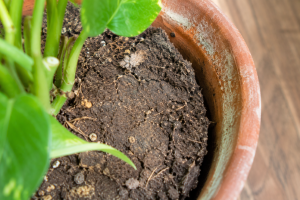
Potting mix breaks down over 12 to 18 months as bark and peat decompose into fine dust. Instead of draining cleanly, old soil compacts into a brick that either repels water or stays soggy at the bottom.
Notice the sensory clues when you check your plant:
- Water pooling on top: Water sits on the surface for 20 seconds before sinking in, then runs down the gap between the shrunken soil block and the pot wall.
- White mineral crust: Chalky white buildup coats the soil surface and terracotta rim from tap water salts.
- Musty or sour smell: Healthy soil smells earthy like a damp forest; a sour, swampy odor means compacted mix is suffocating the roots.
Even if the roots have not filled the pot, degraded soil calls for a fresh soil swap in the exact same pot size.
How to Confirm With a 30-Second Root Ball Check
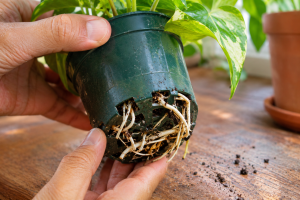
Never guess from the surface alone. Water the plant lightly the day before so the soil stays damp and cohesive, then slide it out to inspect the roots directly.
- Support the base: Slide your hand across the top of the soil with the main stem between your fingers.
- Tip and tap: Turn the pot sideways over your towel and tap the bottom rim gently until the root ball slides free.
- Read the root-to-soil ratio: If you see more white, firm roots wrapping in circles than dark potting mix, repot into a container 1 to 2 inches wider. If plenty of loose soil remains around the edges, slide it straight back in.
Healthy roots look firm and creamy white, tan, or pale orange. Mushy, black, foul-smelling roots point to root rot rather than simple overcrowding.
What Goes Wrong in Real Life (And How to Fix It)
Scenario 1: Jumping Up Too Many Pot Sizes at Once
Early on, I moved a crowded 4-inch pothos straight into a roomy 8-inch ceramic pot so I would not have to repot it again for years. Within three weeks, the lower leaves turned yellow because the huge volume of extra soil stayed wet for two weeks straight.
The fix: Never jump more than 1 to 2 inches in pot diameter for pots under 10 inches (or 2 to 3 inches for large floor plants). Extra wet soil with no roots inside turns anaerobic fast.
Scenario 2: Repotting a Stressed Plant in Dead Winter
I once repotted a sluggish calathea in late December when indoor light lasted barely eight hours and my radiator dried out the air. The plant sulked, curled its leaves, and dropped half its stems before spring arrived.
The fix: Wait until March through August whenever possible so warm temperatures and longer daylight help roots recover quickly. Only repot in winter if a pot breaks or you are rescuing a plant from active root rot.
Common Mistakes I Made (And How to Avoid Them)
- Tearing apart healthy root balls aggressively: Pulling and ripping dense roots causes weeks of transplant shock. Gently loosen only the bottom inch of circling roots with your thumbs.
- Picking a decorative pot with no drainage hole: Pretty cachepots without bottom holes trap excess water at the root zone. Keep the plant in a plastic nursery pot with drainage holes and drop that inside the decorative pot.
- Fertilizing right after repotting: Fresh bagged potting soil already carries starter nutrients for 4 to 6 weeks. Feeding immediately can burn freshly disturbed root tips.
- Burying the stem deeper than before: Piling extra soil high up around the main stem traps moisture against the bark and invites stem rot. Keep the soil line at the exact same height as the old pot.
Frequently Asked Questions
How often do indoor plants need repotting?
Fast-growing plants like pothos, monstera, and spider plants usually need a slightly larger pot every 12 to 18 months. Slow growers like snake plants, ZZ plants, and cacti prefer snug roots and often stay happy in the same pot for 2 to 3 years.
Should I repot a brand-new plant right after bringing it home?
No—leave a new nursery plant in its original plastic pot for at least 3 to 4 weeks. Moving from a bright greenhouse into your home already stresses the plant, and repotting immediately doubles the shock.
What if my plant is already in a huge floor pot I cannot lift?
For heavy 14-inch or larger floor plants, use top-dressing instead of full repotting. Scrape off the top 2 to 3 inches of old, crusty soil with a hand trowel and replace it with fresh potting mix and a scoop of worm castings every spring.
Why do my plant’s leaves droop right after repotting?
Mild drooping for 3 to 5 days is normal transplant shock while fine root hairs adjust to fresh soil. Keep the soil lightly moist—not soaked—and place the pot in bright indirect light out of hot direct sun until the leaves firm back up.