


The Middle East has entered one of its most volatile phases in decades, as missiles streak across the skies of the Gulf and air defence systems scramble to intercept incoming threats. In a dramatic escalation, missiles were shot down over Dubai after Tehran vowed retaliation for the killing of one of its most powerful security figures. The incident has intensified fears of a wider regional war—one that now stretches far beyond traditional flashpoints and threatens global stability.
This article provides a comprehensive, humanized, and SEO-optimized deep dive into the unfolding crisis, the geopolitical stakes, and what it means for the world.
A Night of Tension: Missiles Over Dubai


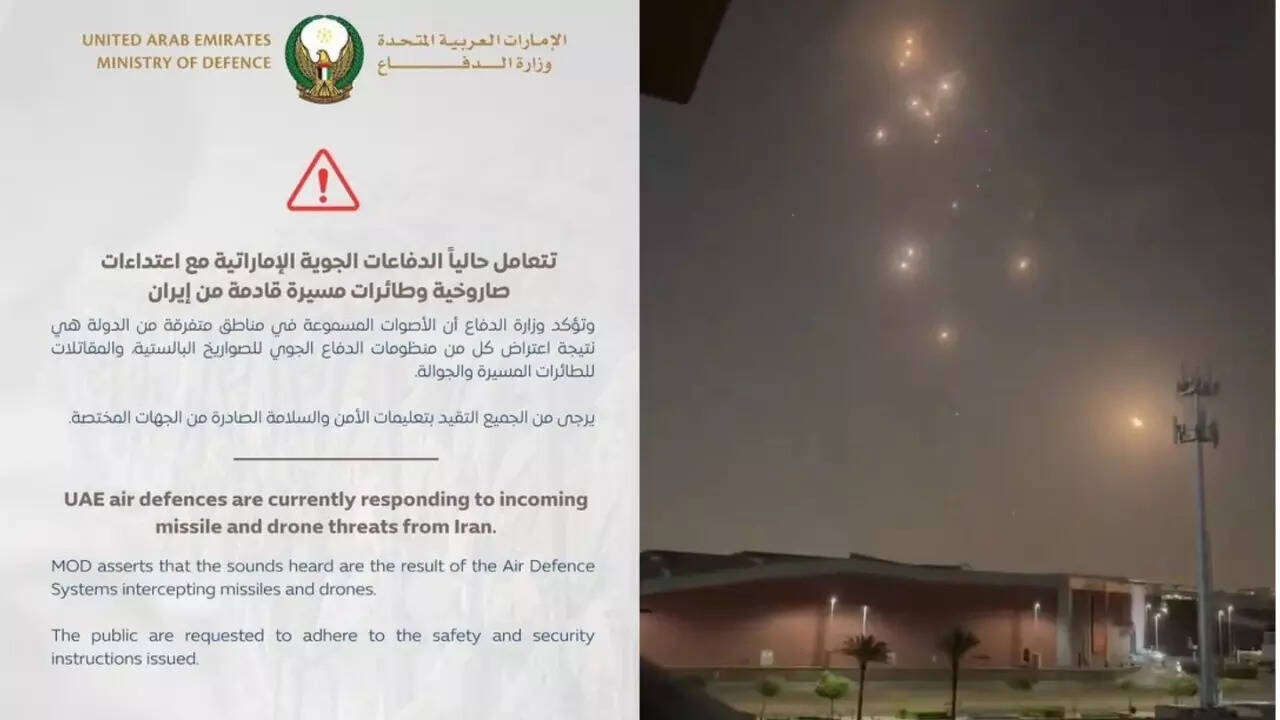
Residents of Dubai witnessed a terrifying spectacle as explosions lit up the night sky. Authorities confirmed that air defence systems successfully intercepted incoming missiles, preventing casualties and widespread destruction.
Emergency alerts urged citizens to stay indoors, while security forces moved swiftly to neutralize the threat. Though no injuries were reported in Dubai itself, the psychological impact was immediate. For a city known for luxury, tourism, and safety, the sight of missile interceptions marked a chilling new reality.
The United Arab Emirates has been increasingly drawn into the broader regional conflict, with multiple missile and drone attacks reported in recent weeks. Defence officials revealed that thousands of projectiles have been intercepted since the escalation began.
The Trigger: Death of Iran’s Security Chief
At the heart of the escalation lies the killing of Iran’s top security official, Ali Larijani. His death in an airstrike attributed to Israel sent shockwaves through Tehran’s leadership.


Iranian authorities described the assassination as a direct act of aggression and vowed a “decisive” response.
Larijani was not just another official—he was a central figure in Iran’s strategic and military planning. His death represents one of the most significant blows to Iran’s leadership in recent years.
In response, Tehran launched a wave of missile and drone attacks targeting multiple countries, including Israel and Gulf states.
Why Dubai Became a Target


Dubai’s emergence as a target is not accidental. The UAE hosts key military installations, including bases used by Western allies. It also plays a crucial role in global trade and energy logistics.
Several strategic reasons explain why Iran would target the UAE:
1. Presence of Foreign Military Bases
The UAE hosts international military forces, making it a symbolic and tactical target.
2. Economic Leverage
Dubai is a global financial hub. Any disruption sends ripples through international markets.
3. Proximity to the Strait of Hormuz
The UAE sits near one of the world’s most critical oil transit routes. Attacks here threaten global energy supplies.
4. Political Signaling
By targeting Gulf states, Iran demonstrates its ability to expand the battlefield beyond Israel.
Missiles have previously landed near military installations in the UAE, causing minor damage but raising serious concerns about escalation.
The Expanding War: From Israel to the Gulf
What began as a confrontation between Iran and Israel has rapidly evolved into a broader regional conflict involving multiple actors.
Key Developments:
-
Iranian missile strikes have hit Israeli cities, killing civilians.
-
Air defences across the Gulf have intercepted drones and missiles.
-
Shipping routes in the Strait of Hormuz have been disrupted.
-
Oil prices have surged amid fears of supply shortages.
The conflict now spans multiple countries, including:
-
Israel
-
Iran
-
United Arab Emirates
-
Saudi Arabia
-
Lebanon
-
Iraq
This geographic spread dramatically increases the risk of a full-scale regional war.
Life Under Threat: Civilian Fear and Disruption


For ordinary people, the conflict is no longer distant.
In Dubai, residents described hearing loud explosions and seeing flashes in the sky. Flights were delayed or rerouted, and schools and offices activated emergency protocols.
Across the region:
-
Families are preparing emergency kits
-
Businesses are adjusting operations
-
Governments are issuing safety advisories
Even in areas not directly hit, the sense of insecurity is growing.
The Role of Air Defence Systems
The successful interception of missiles over Dubai highlights the importance of modern air defence systems.
These systems use advanced radar and interception technology to:
-
Detect incoming threats
-
Track missile trajectories
-
Destroy targets mid-air
The UAE’s defence capabilities have prevented significant casualties, despite repeated attacks.
However, experts warn that no system is foolproof. A sustained barrage could overwhelm even the most advanced defences.
Global Economic Impact
The conflict’s impact extends far beyond the Middle East.
Oil Markets in Turmoil
The Strait of Hormuz handles a significant portion of the world’s oil supply. Disruptions have already driven prices upward.
Shipping Crisis
Thousands of seafarers are stranded as attacks on vessels increase.
Airline Disruptions
Airspace closures and missile threats are forcing airlines to reroute flights.
Investor Anxiety
Global markets are reacting to uncertainty, with volatility increasing across sectors.
Political Fallout and International Reactions
World leaders have expressed deep concern over the escalation.
-
Calls for de-escalation have intensified
-
Diplomatic channels are under strain
-
Military readiness levels are rising
The United States has already conducted strikes targeting Iranian missile sites, further escalating tensions.
Meanwhile, European nations remain cautious, wary of being drawn into a wider conflict.
Could This Lead to a Wider War?
This is the question dominating global discussions.
Several factors increase the risk:
-
Direct attacks on multiple countries
-
Involvement of major powers
-
Strategic importance of the Gulf region
However, there are also factors that could prevent escalation:
-
Economic consequences for all sides
-
Diplomatic pressure from global powers
-
War fatigue among populations
The situation remains highly unpredictable.
Historical Context: A Region on Edge
The Middle East has long been a region of complex rivalries and conflicts. However, the current situation stands out for its scale and intensity.
Unlike previous conflicts:
-
Multiple countries are directly involved
-
Critical global infrastructure is at risk
-
Advanced weapons systems are being used extensively
This combination makes the current crisis particularly dangerous.
What Happens Next?
Several scenarios could unfold:
1. Escalation
Further attacks could lead to a full-scale regional war.
2. Stalemate
Ongoing strikes without decisive outcomes.
3. Diplomatic Breakthrough
International mediation could lead to de-escalation.
For now, the world watches closely as events continue to unfold.
Conclusion: A Defining Moment for the Middle East
The interception of missiles over Dubai is more than just a military event—it is a symbol of a տարածաշրջion on the brink.
As Tehran vows revenge and tensions continue to rise, the risk of a wider conflict looms large. The coming days and weeks will be critical in determining whether the situation spirals into full-scale war or steps back from the edge.
For millions of people across the Middle East—and indeed the world—the stakes could not be higher.