


In a dramatic and potentially historic escalation of tensions in the Middle East, Israel has claimed that it has “eliminated” Iran’s intelligence minister, Esmail Khatib, in a targeted overnight strike on Tehran. The announcement, made by Israeli Defence Minister Israel Katz, has sent shockwaves across global diplomatic and security circles, raising urgent questions about the trajectory of the ongoing Iran–Israel conflict.
This reported assassination—if confirmed—marks one of the most significant blows to Iran’s leadership structure in recent history. It comes amid a series of high-profile killings of senior Iranian officials, signaling a widening campaign aimed at dismantling the country’s intelligence and security apparatus.
Breaking news: What happened overnight?
According to multiple reports, Israel carried out a precision airstrike in Tehran overnight, targeting Iran’s intelligence leadership. Israeli officials claim that Esmail Khatib, the country’s Minister of Intelligence since 2021, was killed in the operation.
Israel’s Defence Minister Israel Katz stated plainly:
“Last night Iran’s Intelligence Minister Khatib was also eliminated.”
However, Iran has not yet officially confirmed Khatib’s death, leaving the claim unverified at the time of writing.
The ambiguity surrounding confirmation adds to the tension, as both nations engage in a fast-moving information war alongside military escalation.
Who was Esmail Khatib?
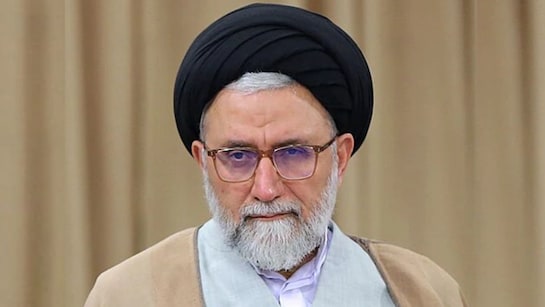
Esmail Khatib was a central figure in Iran’s political and security landscape. Appointed as intelligence minister in August 2021, he oversaw one of the most powerful institutions in the Islamic Republic.
Key facts about Khatib:
-
Senior cleric with deep ties to Iran’s ruling elite
-
Close ally of the country’s supreme leadership
-
Head of the Ministry of Intelligence, responsible for:
-
Surveillance and internal security
-
Counterintelligence operations
-
Overseas espionage missions
-
-
Accused by Western governments of orchestrating cyber operations and repression
Khatib’s ministry has long been described as the backbone of Iran’s internal control and external intelligence operations, making him a high-value target in any conflict involving the country.
A pattern of targeted killings
The reported assassination of Khatib is not an isolated incident. Instead, it appears to be part of a rapid and coordinated campaign targeting Iran’s top leadership.
Within a span of just 24 hours, Israel has claimed responsibility for eliminating multiple high-ranking figures, including:
-
Ali Larijani, head of Iran’s Supreme National Security Council
-
Gholamreza Soleimani, commander of the Basij militia
These killings follow an even larger pattern of decapitation strikes that began weeks earlier, including the assassination of Iran’s Supreme Leader during the opening phase of the war.
Why this matters
This strategy—often referred to as “decapitation strikes”—aims to:
-
Disrupt command and control structures
-
Create internal instability
-
Limit the enemy’s ability to coordinate retaliation
If successful, it could significantly weaken Iran’s operational capabilities, at least in the short term.
Israel’s strategy: Escalation without restraint?
One of the most alarming aspects of the latest development is Israel’s new operational doctrine.
According to official statements, Israeli leadership has now granted its military authority to target senior Iranian officials without requiring additional political approval.
This effectively:
-
Accelerates decision-making on strikes
-
Expands the list of potential targets
-
Signals a shift toward sustained, high-intensity operations
Israel Katz hinted that “significant surprises” could follow, suggesting that further strikes may already be planned.
Iran’s response: Silence… and retaliation
While Iran has not confirmed Khatib’s death, its response to earlier strikes offers insight into what may come next.
Immediate reactions:
-
Missile and drone strikes launched toward Israeli territory
-
Civilian casualties reported
-
Threats of “decisive and regretful” retaliation from Iranian officials
Iran’s leadership has also emphasized that its political system is resilient and not dependent on individual figures, signaling an attempt to project stability despite losses.
The wider conflict: A region on edge


The assassination claim comes amid a full-scale regional conflict involving Iran, Israel, and allied forces.
Key developments:
-
The war is now in its third week
-
Over 2,000 people have reportedly been killed
-
Critical infrastructure across Iran and Lebanon has been targeted
-
The Strait of Hormuz, a vital global oil route, faces severe disruption
This conflict is no longer confined to isolated strikes—it has evolved into a multi-front confrontation involving:
-
Airstrikes in Iran
-
Fighting in Lebanon involving Hezbollah
-
Missile exchanges affecting civilian populations
Global implications: Why the world is watching
The reported killing of Iran’s intelligence minister carries far-reaching global consequences.
1. Intelligence vacuum
Khatib’s removal could:
-
Disrupt Iran’s intelligence networks
-
Delay or weaken coordinated responses
-
Create internal power struggles
2. Risk of wider war
Targeting political figures—not just military assets—raises the risk of:
-
Direct state-to-state escalation
-
Retaliation beyond the Middle East
-
Involvement of global powers
3. Energy and economic shockwaves
Instability in the region threatens:
-
Global oil supply chains
-
Shipping routes through the Gulf
-
International markets already on edge
Information war and uncertainty
One of the most striking aspects of this situation is the lack of independent verification.
-
Israel claims success
-
Iran remains silent
-
International observers are waiting for confirmation
This creates a fog of war, where:
-
Information is weaponised
-
Narratives compete for global attention
-
Misinformation risks increase
Until Iran confirms or denies the death, uncertainty will continue to dominate headlines.
Historical context: Intelligence chiefs as targets
Targeting intelligence leaders is rare—but not unprecedented.
Such figures are:
-
Deeply embedded in national security structures
-
Often protected by layers of secrecy
-
Critical to both domestic control and foreign operations
Eliminating someone in Khatib’s position signals:
-
Exceptional intelligence penetration by the attacker
-
High confidence in targeting accuracy
-
A willingness to escalate beyond conventional limits
What happens next?
The coming days will be crucial.
Possible scenarios:
-
Iran confirms Khatib’s death
-
Likely triggers large-scale retaliation
-
Could escalate into direct confrontation
-
-
Iran denies or downplays the claim
-
Attempts to maintain stability
-
Avoids immediate escalation
-
-
Further Israeli strikes
-
Continuation of leadership-targeting strategy
-
Increased pressure on Iran’s command structure
-
-
International intervention
-
Diplomatic efforts to de-escalate
-
Potential involvement of major global powers
-
Expert outlook: A dangerous turning point
Security analysts widely view this moment as a critical inflection point.
The targeting of:
-
Intelligence leadership
-
Political figures
-
Strategic infrastructure
…suggests that the conflict is entering a new and more dangerous phase.
Rather than limited engagements, both sides appear to be preparing for:
-
Sustained operations
-
Broader regional impact
-
Higher stakes than ever before
Conclusion: A conflict entering uncharted territory
The reported killing of Iran’s intelligence minister, Esmail Khatib, represents far more than a single strike. It is a symbol of how rapidly the conflict between Israel and Iran is escalating—from covert operations to overt, high-profile assassinations at the highest levels of power.
Whether confirmed or not, the claim alone has already:
-
Heightened tensions
-
Triggered global concern
-
Increased the risk of wider war
As the situation unfolds, the world watches closely—aware that each new development could bring the region closer to a full-scale geopolitical crisis.