Why Your Mock Test Score is Stuck (And How to Jump from 110 to 140)
There is a common disease among aspirants called “Mock Test Addiction.”
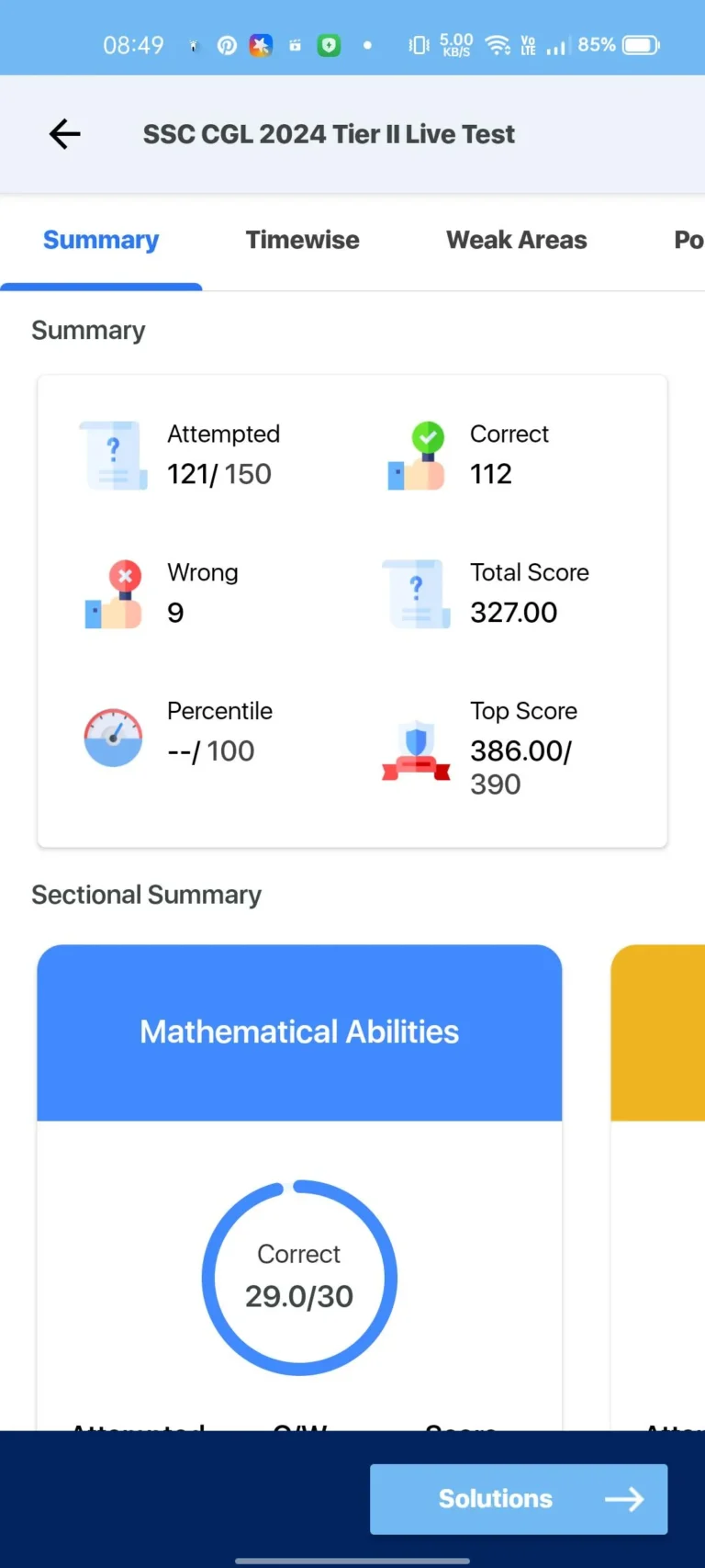
You wake up, take a mock test, score 115, feel sad, and then take another mock test hoping to score 140.
This is not studying; this is gambling.
If your score has been stuck between 100 and 120 for the last month, taking more tests will not help you. You are making the same mistakes repeatedly. To cross the 140+ barrier, you don’t need to study “more”; you need to fix the “leaks” in your bucket.
Today, I am sharing the “3-Color Analysis Method”—a system used by toppers to track every single mark.
The Golden Rule: 1 Hour Test = 2 Hours Analysis
If you spend 60 minutes taking a test, you must spend 120 minutes analyzing it. If you cannot do this, do not take the test.
Step 1: The “3-Color” Filtering System
Open your Mock Test solution. Do not just look at the “Wrong” answers. You need to categorize your performance into three specific colors using a notebook or Excel sheet.
🔴 Red Category (The “Knowledge Gap”)
-
Definition: Questions you skipped or got wrong because you did not know the concept.
-
Example: You saw a “Geometry Circle” question and had no idea which theorem to apply.
-
Action: These are NOT “silly mistakes.” These are holes in your syllabus.
-
Fix: Watch a YouTube video on that specific topic immediately. Do not take the next mock until you fix this topic.
-
🟡 Yellow Category (The “Silly Mistake”)
-
Definition: You knew the concept, you knew the formula, but you did a Calculation Error or Read the Question Wrong.
-
Example: Calculating $12 \times 5 = 70$ in a hurry.
-
Action: This is the most dangerous category. It kills your rank.
-
Fix: Note it down in your “Mistake Notebook” (see below).
-
🟢 Green Category (The “Time Trap”)
-
Definition: Questions you got Correct, but took too much time (e.g., spending 3 minutes on one Reasoning puzzle).
-
Action: Getting it right is not enough. In SSC/Bank exams, time is money.
-
Fix: Search for “Short Tricks” for that specific question type.
-
Step 2: Create The “Mistake Notebook” (Crucial)
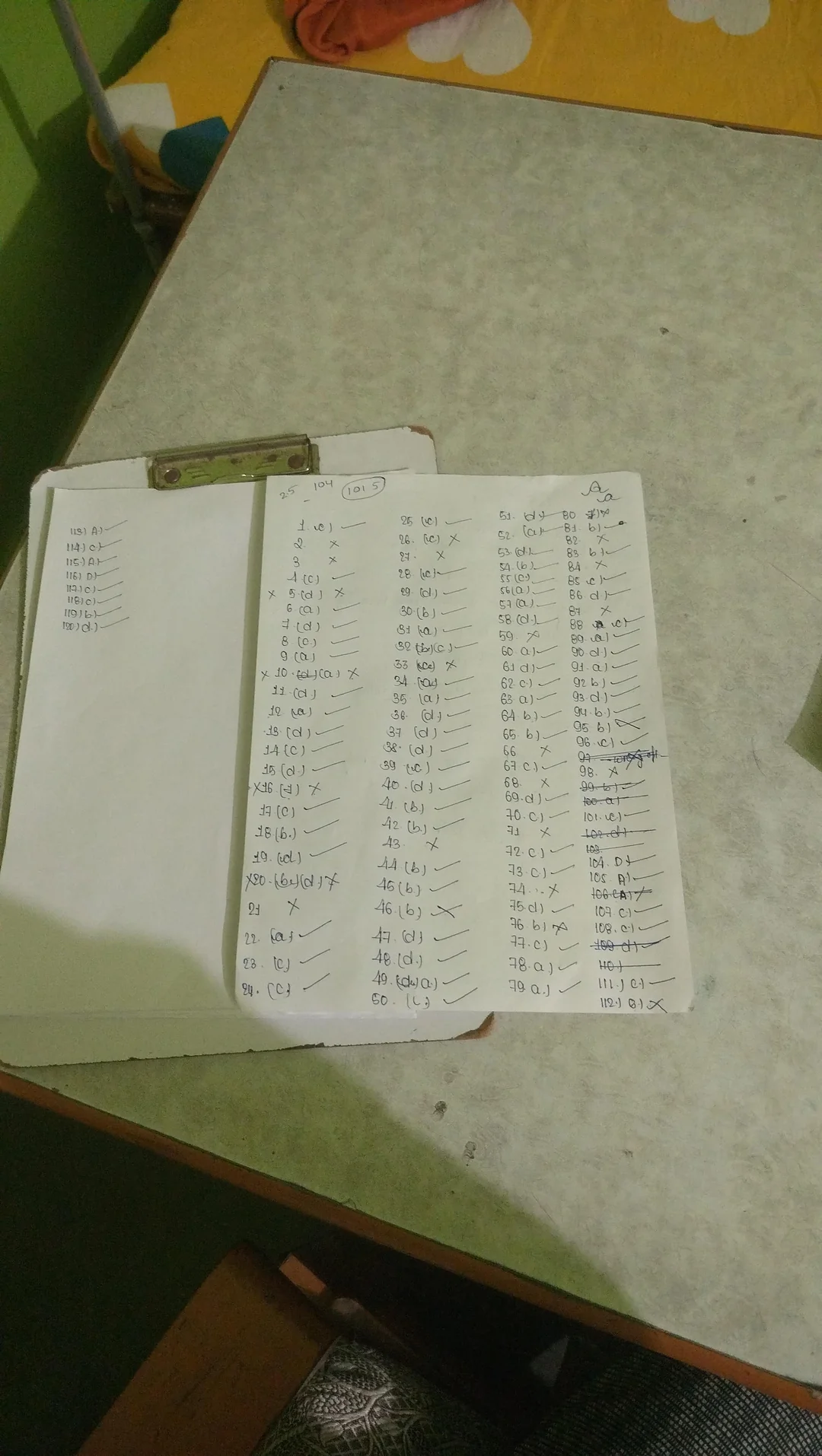
You must maintain a physical notebook. Do not do this in your head. Every Sunday, read this notebook.
Format of the Notebook:
| Date | Mock No. | Subject | The Mistake (Be Specific) | The Fix |
| 12 Oct | Test 4 | Maths | Used Volume formula instead of Surface Area | Read question carefully: “Total Surface Area” |
| 12 Oct | Test 4 | English | Confused between ‘Effect’ and ‘Affect’ | Effect is Noun, Affect is Verb |
| 12 Oct | Test 4 | Reasoning | Spent 4 mins on Blood Relation | Skip “Coded Blood Relation” if it looks long |
[Insert Your Original Photo Here: A photo of your actual handwritten notebook with similar columns]
Step 3: The “Skip Strategy” (Art of Leaving)
The difference between a 120-scorer and a 150-scorer is often not knowledge, but decision making.
You must learn to SKIP questions.
-
The 30-Second Rule: If you read a Maths question and don’t know the starting step within 30 seconds, SKIP IT.
-
The Ego Trap: Never fight with a question. If a “Number Series” question isn’t solving, let it go. It carries the same 2 marks as the easy question next to it.
Conclusion: Improvement Happens Between Tests
Your score does not increase during the test. It increases in the 20 hours between Test A and Test B.
My Challenge to You:
-
Stop taking daily mocks. Take mocks only on Alternate Days (Mon, Wed, Fri).
-
Use the “Gap Days” (Tue, Thu, Sat) to fix the Red Category topics you found.
-
Start a Mistake Notebook today.
If you are struggling with calculation speed (Yellow Category), check our guide on Maths Strategy for Non-Maths Students.
his video perfectly explains the “Attempt Strategy” which complements your analysis article.