


The rapidly escalating war involving Iran, the United States, and Israel has triggered a major geopolitical crisis with global implications. At the heart of the turmoil lies the Strait of Hormuz, one of the world’s most important maritime chokepoints for energy trade. As tensions rise and oil shipments are disrupted, calls for international military intervention to secure the waterway have intensified.
However, European Union leaders have largely rejected direct military involvement, choosing diplomacy and de-escalation over escalation. This decision has exposed divisions among Western allies, raised questions about NATO’s future role in Middle Eastern conflicts, and sparked debate about Europe’s strategic autonomy in global security matters.
This article explores the crisis in depth—examining why EU leaders are refusing military engagement, how the conflict began, the economic consequences of the Strait of Hormuz disruption, and what the future may hold for global stability.
The Strait of Hormuz Crisis: Why It Matters


The Strait of Hormuz connects the Persian Gulf with the Gulf of Oman and the Arabian Sea. It is only about 21 miles wide at its narrowest point but plays an outsized role in global energy markets.
Roughly 20% of the world’s oil supply passes through this strait every day, along with massive volumes of liquefied natural gas (LNG).
Because of this, any disruption to shipping through the strait can have immediate consequences for global markets, fuel prices, and economic stability.
What Triggered the Crisis
The current crisis began after joint U.S.–Israeli military strikes against Iran in February 2026, which killed key Iranian leadership figures and targeted military infrastructure. Iran retaliated with missile and drone attacks across the region and warned that ships connected to the United States or its allies would not be allowed through the Strait of Hormuz.
The consequences were immediate:
-
Tanker traffic dropped by around 70% within days.
-
Many ships stopped entering the strait entirely.
-
Oil prices surged above $100 per barrel, reaching about $126 at their peak.
The disruption quickly became one of the most severe shocks to global energy supply since the 1970s oil crisis.
U.S. Pressure for Allied Military Support
As shipping ground to a halt, the United States began pushing its allies to deploy naval forces to protect commercial vessels and reopen the waterway.
According to reports, the U.S. administration asked several countries—including European NATO allies—to send warships to escort tankers through the strait.
The request was based on a simple argument:
Countries that benefit from oil transported through the Strait of Hormuz should help ensure that trade routes remain open.
Washington suggested that a coalition naval force could deter Iranian attacks and restore safe passage for ships.
However, the response from Europe was far from enthusiastic.
EU Leaders Reject Military Involvement
Many European governments have refused to participate in direct military operations in the Strait of Hormuz.
Several key EU states—including Germany, Italy, Greece, and Spain—have either explicitly rejected the idea or signaled strong reluctance to join a U.S.-led mission.
Spain’s government was particularly outspoken, declaring it would not participate in any military operation connected to the war and stressing that escalation would only worsen the conflict.
European leaders have instead emphasized:
-
Diplomacy
-
De-escalation
-
Multilateral negotiations
The decision reflects a broader EU strategy that prioritizes political solutions rather than military escalation.
Europe’s Strategic Concerns
The EU’s reluctance to intervene militarily is driven by several strategic concerns.
1. Avoiding a Wider War
European leaders fear that deploying naval forces could draw them directly into the war between Iran, the United States, and Israel.
With tensions already spreading across the Middle East—including drone strikes in the United Arab Emirates and missile threats against Israel—many European officials worry that escalation could trigger a regional conflict.
For the EU, the priority is preventing a wider war that could destabilize the entire region.
2. Legal and Political Questions
Some European governments have questioned the legal basis of the war itself.
Several officials argue that the initial strikes on Iran lacked clear international authorization, making participation in related military operations politically and legally problematic.
Spain’s government, for example, described the war as illegal under international law and opposed any involvement.
3. Domestic Political Pressure
Public opinion in many European countries strongly opposes new military interventions in the Middle East.
Memories of the Iraq War and Afghanistan remain fresh, and protests have already taken place in several European cities calling for an end to the conflict.
European leaders are therefore under intense domestic pressure to avoid another overseas military campaign.
Europe’s Diplomatic Alternative
Instead of military intervention, EU leaders are promoting diplomatic solutions to reopen the Strait of Hormuz.
One proposal involves replicating the Black Sea grain corridor model, which allowed Ukraine to export grain despite the ongoing war with Russia.
The idea is to create an internationally monitored maritime corridor that would allow ships to pass safely through the strait without escalating the conflict.
EU foreign policy chief Kaja Kallas has discussed the possibility with the United Nations and other international partners.
Such a plan could involve:
-
International monitoring
-
Neutral escort arrangements
-
Diplomatic agreements with Iran
The goal is to restore global trade while avoiding direct military confrontation.
Existing EU Naval Missions
While the EU has rejected new military operations in the Strait of Hormuz, it already maintains a limited naval presence in the region.
One such mission is Operation Aspides, launched in 2024 to protect commercial shipping from attacks in nearby waters.
The mission has a strictly defensive mandate, focusing on escorting vessels and improving maritime awareness rather than conducting combat operations.
Some European officials have suggested expanding this mission rather than creating a new U.S.-led military coalition.
However, even this proposal has faced skepticism among EU member states.
Divisions Within NATO
The crisis has exposed growing divisions between the United States and its NATO allies.
Washington believes a stronger military response is necessary to ensure freedom of navigation and deter Iranian aggression.
European governments, however, are wary of being pulled into a conflict they did not initiate.
Some analysts argue that this disagreement reflects a broader shift in transatlantic relations.
Europe is increasingly seeking greater strategic autonomy, particularly in foreign policy and military decisions.
The Strait of Hormuz crisis may therefore represent a turning point in how NATO allies coordinate their responses to global conflicts.
The Global Economic Impact


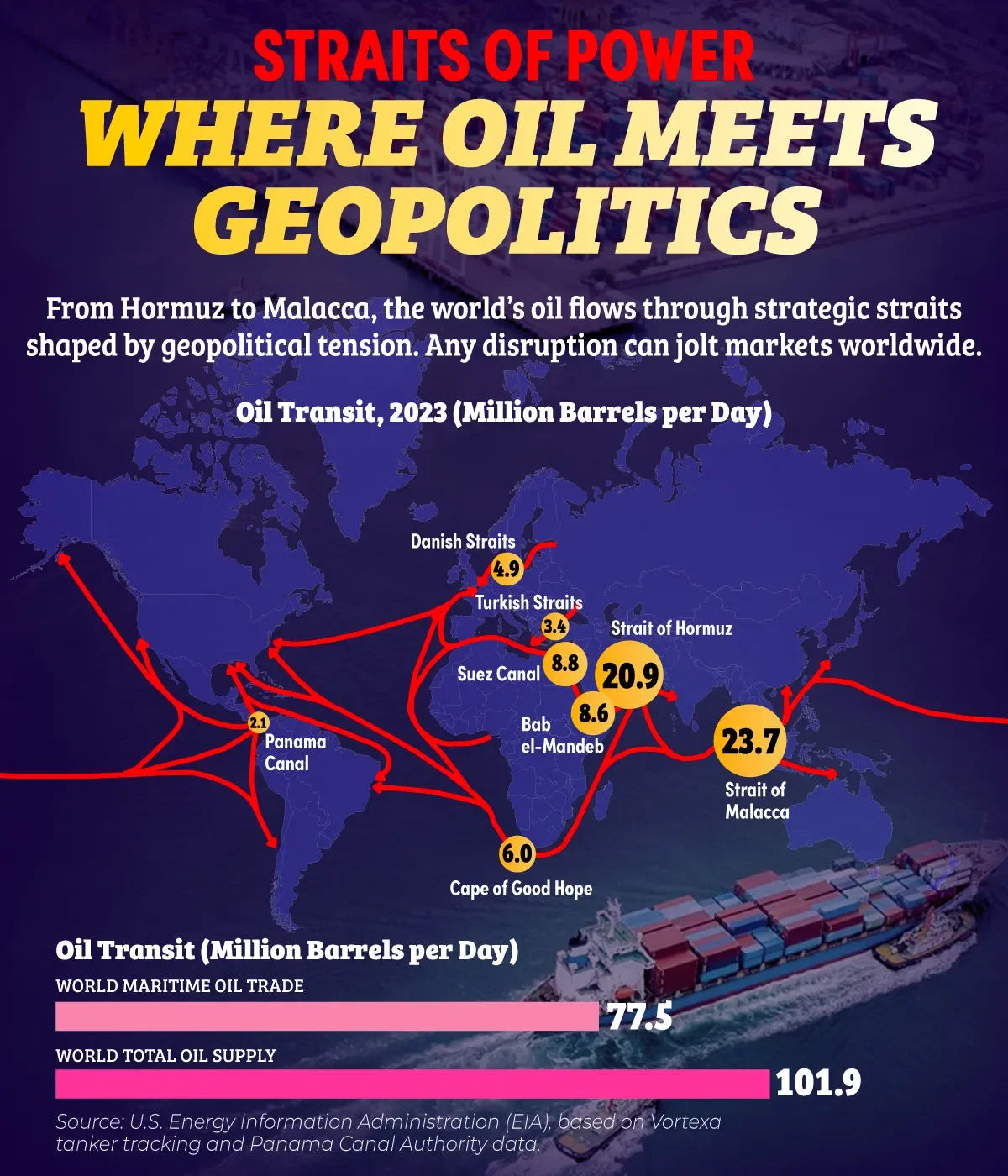
The disruption of the Strait of Hormuz has already had dramatic consequences for the global economy.
Energy markets reacted immediately to the crisis.
Oil Prices Surge
As shipping slowed and tanker traffic collapsed, oil prices surged sharply.
Brent crude rose above $100 per barrel and peaked around $126, reflecting fears of prolonged supply disruptions.
Such price spikes can have ripple effects across the global economy, increasing costs for:
-
Transportation
-
Manufacturing
-
Agriculture
-
Consumer goods
Risk of Food Shortages
The strait is also a critical route for fertilizer shipments.
If supplies remain disrupted, global agricultural production could suffer—potentially triggering food shortages in vulnerable regions.
European officials have warned that reduced fertilizer exports could lead to food insecurity next year.
Energy Security Concerns in Europe
Although Europe is less dependent on Gulf oil than Asian markets, the region still relies heavily on energy shipments that pass through the Strait of Hormuz.
Europe receives about 12–14% of its LNG from Qatar, which must travel through the strait.
A prolonged closure could therefore threaten Europe’s energy supply—particularly during winter months.
To prepare for possible shortages, European governments are already:
-
Increasing strategic oil reserves
-
Diversifying energy sources
-
Expanding renewable energy investment
The crisis may accelerate Europe’s long-term transition away from fossil fuel dependence.
Iran’s Position
Iran has defended its actions as legitimate retaliation against what it calls aggression by the United States and Israel.
Iranian officials argue that the strait is not fully closed but restricted to vessels connected with hostile countries.
Tehran has also warned that any foreign military intervention in the region would provoke a stronger response.
This stance has raised fears of direct confrontation between Iranian forces and international navies if foreign warships enter the area.
Potential Scenarios Going Forward
Several possible scenarios could unfold in the coming weeks.
Diplomatic Breakthrough
The best-case scenario would involve negotiations leading to a safe shipping corridor and gradual de-escalation of hostilities.
Limited Naval Escort Mission
A coalition of countries might deploy defensive naval escorts to protect tankers without engaging in combat.
Regional Escalation
If attacks on shipping continue, military confrontation between Iran and international forces could become unavoidable.
Global Economic Crisis
A prolonged closure of the Strait of Hormuz could trigger severe economic disruption worldwide.
The Bigger Geopolitical Picture
The EU’s refusal to join military operations reflects a broader transformation in global geopolitics.
Several trends are becoming clear:
-
Europe is seeking greater independence in foreign policy.
-
The United States faces increasing resistance from allies on military interventions.
-
Energy security remains one of the most powerful drivers of global politics.
The Strait of Hormuz crisis illustrates how regional conflicts can rapidly evolve into global economic and geopolitical challenges.
Conclusion
The decision by European Union leaders to reject military involvement in the Strait of Hormuz marks a significant moment in the unfolding Iran war.
Faced with pressure from the United States to deploy naval forces, EU governments have instead chosen diplomacy, caution, and de-escalation.
While this approach reflects Europe’s desire to avoid another Middle Eastern conflict, it also highlights growing differences among Western allies about how to respond to global crises.
Meanwhile, the closure of the Strait of Hormuz continues to threaten global energy markets, trade routes, and economic stability.
Whether through diplomacy, international cooperation, or military deterrence, the coming weeks will determine whether the world’s most important shipping lane can be reopened without triggering a wider war.
For now, Europe’s message is clear: the priority is preventing escalation, not expanding the battlefield.