


The debate over Britain’s nuclear deterrent has intensified following comments from Ed Davey, who recently argued that the United Kingdom should consider building its own nuclear missiles rather than relying on the United States. His remarks have sparked a wider discussion about national security, defense independence, and the future of the UK’s nuclear program in an increasingly unstable global environment.
For decades, Britain’s nuclear deterrent has been deeply intertwined with American technology and cooperation. The UK’s nuclear warheads are domestically produced, but the Trident missile system—which carries those warheads—is leased from the United States. Davey’s comments suggest that this arrangement could leave Britain vulnerable if geopolitical alliances shift.
As tensions rise globally and security concerns grow across Europe, the question is becoming more urgent: Should the UK develop its own nuclear missile system to ensure complete strategic independence?
This article explores Davey’s proposal, the current structure of the UK’s nuclear deterrent, the potential costs and benefits of developing domestic missiles, and what it could mean for Britain’s role in global security.
The Current UK Nuclear Deterrent System
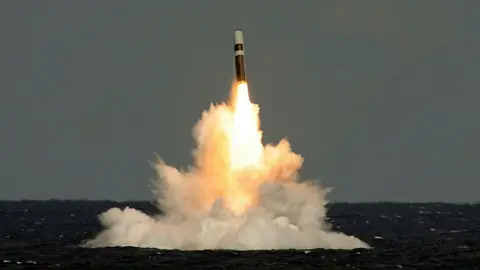


Britain’s nuclear deterrent is centered on the Trident nuclear programme, which has been the backbone of UK strategic defense since the 1990s.
Under this system, the Royal Navy operates a fleet of Vanguard-class submarine vessels capable of carrying nuclear missiles. These submarines patrol the oceans at all times in what is known as continuous at-sea deterrence (CASD).
However, the missiles themselves are not British-made.
The UK currently leases Trident II D5 missile systems from the United States Navy. These missiles are stored and maintained at a joint facility in the United States before being deployed on British submarines.
This arrangement has allowed Britain to maintain a credible nuclear deterrent without the immense costs associated with developing its own missile technology. But critics argue it also creates dependency.
Ed Davey’s Warning About Strategic Dependence


According to Ed Davey, the UK must reassess its reliance on the United States for such a critical part of its national defense.
Davey suggested that Britain should explore developing its own nuclear-capable missile systems to ensure full strategic autonomy.
His argument centers on several key concerns:
1. Changing Global Alliances
Although the UK and the United States maintain one of the closest military partnerships in the world, political alliances can shift over time.
Davey warned that Britain cannot assume the US will always remain aligned with UK strategic interests.
2. Strategic Independence
Many defense analysts argue that a fully independent nuclear deterrent requires control over every element of the system—from warhead production to missile delivery.
Currently, the UK controls its warheads but relies on American missiles.
3. Growing Geopolitical Tensions
Rising tensions with countries such as Russia, China, and Iran have forced Western governments to reconsider defense readiness.
Davey believes Britain should be prepared for a future where alliances cannot be taken for granted.
The History of Britain’s Nuclear Weapons Program



The UK became the world’s third nuclear power in 1952, following the United States and the Soviet Union.
The program began after World War II when British leaders feared the country could become strategically vulnerable without its own nuclear capability.
Early nuclear tests were conducted during Operation Grapple, a series of experiments in the Pacific Ocean designed to develop Britain’s first thermonuclear weapons.
By the 1960s, the UK had shifted toward submarine-launched ballistic missiles as the most effective deterrent.
Initially, Britain used the Polaris missile, which was later replaced by the Trident system in the 1990s.
Since then, the nuclear deterrent has remained a central pillar of UK defense policy.
Why the UK Relies on the United States
The UK’s partnership with the United States on nuclear missiles dates back decades.
One of the key agreements shaping this relationship is the UK–US Mutual Defence Agreement, which enabled close collaboration on nuclear technology.
Under this arrangement:
-
Britain designs and manufactures its nuclear warheads
-
The missile delivery systems are leased from the United States
-
Both countries share nuclear research and testing data
This system allows the UK to maintain nuclear capability without bearing the full cost of developing every component independently.
However, critics argue it raises important questions about sovereignty and operational control.
The Cost of Developing British Nuclear Missiles
Building a domestic nuclear missile system would be an extremely expensive undertaking.
Experts estimate that developing a new submarine-launched ballistic missile (SLBM) system from scratch could cost tens of billions of pounds.
Key expenses would include:
-
Research and development of missile technology
-
New testing facilities
-
Production infrastructure
-
Maintenance and storage systems
-
Integration with existing submarine platforms
The UK is already investing heavily in the next generation of nuclear submarines known as the Dreadnought-class submarine programme, which will replace the aging Vanguard fleet.
Adding a new missile development program on top of that could dramatically increase defense spending.
Arguments Supporting Davey’s Proposal
Supporters of Davey’s idea say Britain must prepare for an uncertain geopolitical future.
Complete Strategic Independence
Developing domestic missiles would mean the UK controls every aspect of its nuclear deterrent.
This could eliminate concerns about reliance on foreign partners during crises.
Long-Term Security
As global tensions rise, many defense experts believe countries must strengthen their military capabilities.
An independent missile program could ensure Britain remains a major strategic power.
Technological Leadership
Developing new missile systems could boost Britain’s defense industry and create high-skilled jobs in engineering and aerospace.
Arguments Against the Plan
Critics argue that Davey’s proposal could create more problems than it solves.
Massive Financial Cost
Developing nuclear missile technology independently could cost tens of billions of pounds.
Opponents argue those resources could be better spent on conventional defense, cybersecurity, or domestic priorities.
Risk to International Cooperation
The UK–US defense partnership is one of the most significant alliances in the world.
Attempting to replace American technology could weaken that cooperation.
Nuclear Proliferation Concerns
Some critics worry that expanding nuclear programs could undermine global efforts to reduce nuclear weapons.
The UK is a signatory to the Treaty on the Non-Proliferation of Nuclear Weapons, which aims to limit the spread of nuclear weapons worldwide.
The Future of Britain’s Nuclear Deterrent
The UK government has consistently supported maintaining the Trident system.
Both the Conservative Party and the Labour Party have broadly backed nuclear deterrence, although debates continue over cost and modernization.
The construction of the Dreadnought-class submarines suggests Britain intends to keep its nuclear capability well into the 2060s.
However, Davey’s proposal highlights a growing discussion about how independent that deterrent truly is.
As geopolitical competition intensifies, policymakers may be forced to reconsider whether the current system provides enough strategic autonomy.
Global Nuclear Powers and the Changing Security Landscape
Today, several countries possess nuclear weapons.
The recognized nuclear states under international agreements include:
-
United States
-
Russia
-
China
-
France
-
United Kingdom
Other nations with nuclear arsenals include India, Pakistan, North Korea, and widely believed nuclear power Israel.
As these arsenals grow and evolve, strategic competition between global powers continues to intensify.
Could Britain Realistically Build Its Own Missiles?
Technologically, the UK likely has the capability to develop its own ballistic missiles.
The country possesses advanced aerospace industries and nuclear research facilities.
However, building a complete missile system would require:
-
Extensive testing programs
-
New production infrastructure
-
Long-term financial investment
-
Political consensus
Even with strong political support, experts say it could take 10–20 years to develop a fully operational domestic missile system.
Public Opinion and Political Debate
Nuclear weapons remain one of the most controversial issues in British politics.
Some political groups advocate for disarmament, while others argue that nuclear deterrence is essential for national security.
The Campaign for Nuclear Disarmament has long pushed for the complete elimination of Britain’s nuclear arsenal.
Meanwhile, supporters of nuclear deterrence believe the weapons are necessary to prevent conflict between major powers.
Davey’s proposal adds a new dimension to this debate: not whether the UK should have nuclear weapons, but whether it should control every element of them.
What This Means for the UK’s Global Role
Britain’s nuclear deterrent plays a significant role in its international influence.
As one of the five permanent members of the United Nations Security Council, the UK’s nuclear capability contributes to its status as a major global power.
Maintaining that role in the coming decades will depend on how Britain adapts to changing geopolitical realities.
Whether through continued cooperation with the United States or through greater strategic independence, the decisions made today could shape British defense policy for generations.
Conclusion
The proposal by Ed Davey that the UK should develop its own nuclear missiles has ignited an important national conversation.
While Britain already possesses nuclear warheads and submarine-based deterrence, its reliance on American missile technology raises questions about strategic autonomy.
Supporters of Davey’s plan argue that building domestic missile systems would strengthen Britain’s independence and long-term security. Critics counter that the financial costs and potential diplomatic consequences could outweigh the benefits.
As global tensions continue to rise and alliances evolve, the debate over Britain’s nuclear future is unlikely to fade.
What remains clear is that the choices made today will determine whether the UK continues to rely on its closest ally—or chooses to pursue complete nuclear independence in an uncertain world.