The IPL changes every season: fixtures, squads, injuries, broadcast arrangements and even competition details can be updated. This page explains the stable parts of how the tournament works and points readers to official sources for the parts that can change.
How IPL Started and Why It Changed Indian Cricket Forever
The IPL was launched by the Board of Control for Cricket in India (BCCI) in 2008, conceived largely by then-BCCI Vice President Lalit Modi. The model was borrowed from English football’s Premier League — franchise-based teams representing Indian cities, playing in a short, high-intensity Twenty20 format designed for prime-time television.
The timing was deliberate. Twenty20 cricket — with its three-hour matches, high-scoring entertainment, and accessible format — was growing rapidly in popularity following England’s domestic T20 competition and the inaugural ICC World Twenty20 in 2007, which India won. The BCCI saw an opportunity to create a domestic league that could monetise Indian cricket’s enormous fan base while simultaneously providing competitive high-pressure experience for Indian players.
What nobody fully anticipated was how completely the IPL would reshape not just Indian cricket but the global cricket economy. The television rights for the IPL 2023-27 cycle sold for ₹48,390 crore — making it the second most expensive broadcast property in sport globally on a per-match basis, behind only the NFL. International players restructure their national schedules to be available for IPL. Young players from India and abroad have launched international careers on the back of IPL performances. The tournament has become a legitimate global sporting institution in less than two decades.
The 10 Teams and Their Home Cities
IPL currently has 10 franchises, each representing an Indian city or region:
Mumbai Indians — The most successful franchise in IPL history with five titles. Owned by Reliance Industries (Mukesh Ambani family). Home ground: Wankhede Stadium. Known for their strong batting lineups and consistent recruitment of quality players over the years.
Chennai Super Kings — Four-time champions and arguably the most consistently successful franchise across the tournament’s history when measured over all seasons. Led for most of their existence by MS Dhoni, who remains one of the most beloved figures in Indian cricket. Home ground: MA Chidambaram Stadium.
Royal Challengers Bengaluru — One of the most followed teams despite their long wait for a maiden title, driven significantly by the passionate fan base of Virat Kohli and the team’s association with Bengaluru’s cricket-obsessed culture. Home ground: M Chinnaswamy Stadium.
Kolkata Knight Riders — Two-time champions. Owned by Shah Rukh Khan, which significantly elevated the franchise’s popular appeal early in the tournament’s history. Home ground: Eden Gardens — one of the largest cricket stadiums in the world.
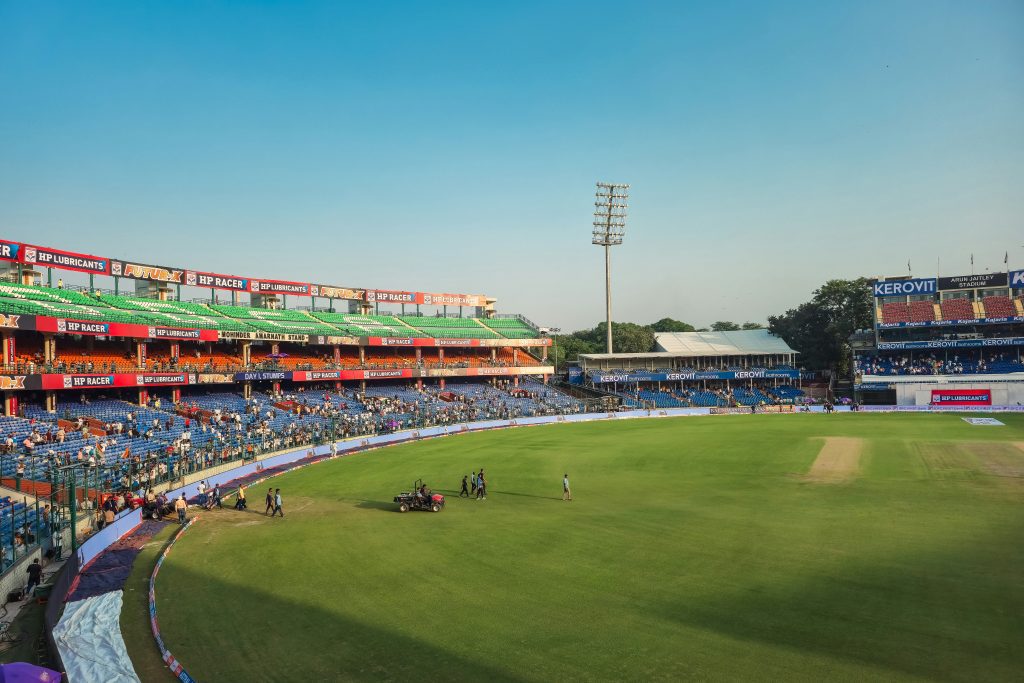
Delhi Capitals — Formerly Delhi Daredevils, rebranded in 2019. Yet to win an IPL title but have been competitive across multiple recent seasons. Home ground: Arun Jaitley Stadium.
Rajasthan Royals — Winners of the inaugural IPL in 2008 under the captaincy of Shane Warne. Known historically for unearthing unknown talent at low auction prices. Home ground: Sawai Mansingh Stadium, Jaipur.
Sunrisers Hyderabad — One-time champions (2016). Known for strong bowling attacks and historically aggressive opening batting. Home ground: Rajiv Gandhi International Cricket Stadium.
Punjab Kings — Yet to win a title but perennial participants. Home ground: PCA Stadium, Mohali (with some matches at other venues).
Lucknow Super Giants — One of the two newest franchises, added in 2022. Home ground: BRSABV Ekana Cricket Stadium, Lucknow.
Gujarat Titans — The other franchise added in 2022. Won the title in their debut season — one of the most remarkable achievements in IPL history. Home ground: Narendra Modi Stadium, Ahmedabad — the largest cricket stadium in the world.
How the IPL Auction Works
The IPL player auction is one of the most watched and analysed events in Indian cricket — a combination of competitive sport and high-stakes theatre that generates enormous media coverage in its own right.
Each franchise has a purse — a budget cap — within which they must build their squad of 25 players. Before each auction, franchises can retain a limited number of their existing players at predetermined costs. The remaining available players enter a pool from which franchises bid competitively.
The auction operates like a live bidding process. An auctioneer announces a player with a base price — the minimum bid. Franchises signal their interest with a paddle, and the bidding escalates until only one franchise remains. The gap between a player’s base price and their final auction price is often dramatic — young players with high perceived potential or established international stars regularly sell for 10 to 20 times their base price.
The Right to Match (RTM) card allows franchises to match the highest bid for a released former player and retain them — adding another layer of tactical complexity to auction strategy.
The mega auction — held every few years — sees most players released back into the pool with franchises rebuilding largely from scratch. These events are particularly significant because they reset the competitive balance and often produce franchise-defining decisions.
The Format: How the Tournament Runs
The IPL group stage involves each of the 10 teams playing 14 matches — home and away against each opponent. Points are awarded for wins (2 points), and net run rate acts as a tiebreaker. The top four teams at the end of the group stage progress to the playoffs.
The playoff structure:
- Qualifier 1: 1st vs 2nd — winner goes directly to the final
- Eliminator: 3rd vs 4th — loser is eliminated
- Qualifier 2: Loser of Qualifier 1 vs winner of Eliminator — winner goes to the final
- Final: Winner of Qualifier 1 vs winner of Qualifier 2
This structure gives the top two teams two chances to reach the final — a deliberate advantage that rewards strong group stage performance.
Why IPL Is So Competitive — and What Makes It Different From Test Cricket
IPL’s Twenty20 format is fundamentally different from Test cricket in ways that make it more accessible for casual fans while remaining technically fascinating for serious followers.
A T20 innings lasts 20 overs — 120 deliveries. Both teams bat once. The entire match is completed in approximately three to four hours. The scoring rates are dramatically higher than any other format — teams regularly post totals of 180 to 220 runs, and chases of 200-plus are attempted and achieved regularly.
The tactical complexity is compressed and accelerated. Every delivery carries high stakes. A fielding captain makes 20 to 30 impactful decisions in a single innings. Batsmen must assess bowlers within their first one or two deliveries and commit to aggressive stroke play that would be suicidal in a Test match. Bowlers must execute precisely in high-pressure situations where one bad over can swing a match completely.
IPL has also pioneered the use of data analytics in cricket strategy — DRS decisions, field placements, bowling match-ups, and batting orders are now informed by sophisticated ball-tracking and player performance databases that rival what major American sports franchises use.
Great Moments That Defined IPL History
MS Dhoni’s finishing ability — No player has been more synonymous with IPL match-winning than Dhoni. His ability to pace a run chase, keep wickets in hand, and accelerate at the death produced so many final-over wins for Chennai Super Kings that it became the defining narrative of the tournament’s first decade.
Chris Gayle’s 175 not out in 2013 — The highest individual score in IPL history. Royal Challengers Bengaluru’s Gayle hit 17 sixes in an innings that lasted just 66 balls and remains one of the most extraordinary batting displays in the history of Twenty20 cricket globally.
Mumbai Indians’ record five titles — No other franchise has matched Mumbai’s consistency across the tournament. Their 2020 title, won in the UAE during the COVID-19 pandemic, completed a run of winning every other IPL edition between 2013 and 2020.
Gujarat Titans winning in their debut season (2022) — Under Hardik Pandya’s captaincy, a team assembled from scratch with no history won the tournament at the first attempt. It remains one of the most surprising results in IPL history.
How to Follow IPL in India
IPL matches are broadcast on Star Sports network on television. The digital streaming rights are held by JioHotstar — every match is available live, with multiple camera angles, expert commentary, and real-time statistics. You can follow ball-by-ball scoring through the BCCI and IPL official apps, ESPNcricinfo, and Cricbuzz — all free and available on Android and iOS.
A Final Word
Eighteen seasons in, IPL has become something more than a cricket tournament. It is a cultural event — a two-month period every year when cricket dominates dinner table conversations, office discussions, and social media feeds across India. It has produced careers, rivalries, iconic moments, and a generation of cricket fans who came to the sport through the spectacle of T20 before discovering the deeper pleasures of Test cricket.
Whether you are a lifelong cricket follower or someone watching your first full season — IPL rewards attention. The more you understand the strategy, the players, and the context, the more compelling it becomes.
Sources and verification
For factual or time-sensitive points, start with primary or official sources:
Links are provided for verification; external pages can change after this article is updated.
Continue on ppdv.in

Alen edits ppdv.in and writes practical guides for readers in India. Articles use published sources where factual accuracy matters and are updated when important information changes.